

You are sitting completely still—so why is your heart suddenly racing?
The sensation can feel alarming, but one heart-rate reading cannot explain the cause by itself.
Stress, caffeine, poor sleep, dehydration, fever, certain medications, and even a change in posture can affect heart rate.
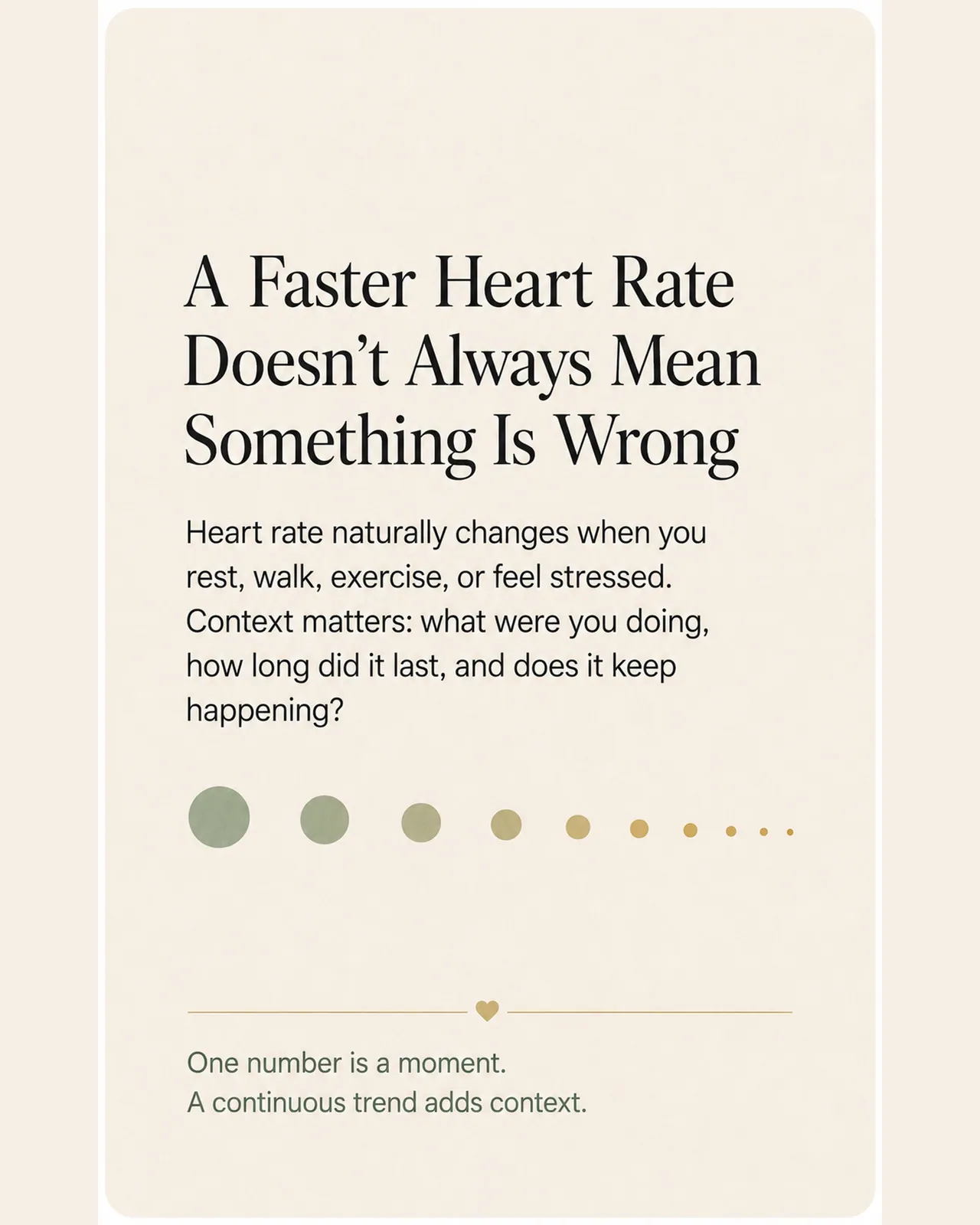
Instead of focusing on one number, capture a few pieces of context:
What were you doing when it started? How long did the change last? Was it an isolated event or has it happened repeatedly? Did you experience chest pain, fainting, or severe shortness of breath?
The EnergyMo Smart Ring uses optical sensors to observe changes in blood volume beneath the skin. Those light signals are processed to estimate your pulse and create a continuous heart-rate trend.
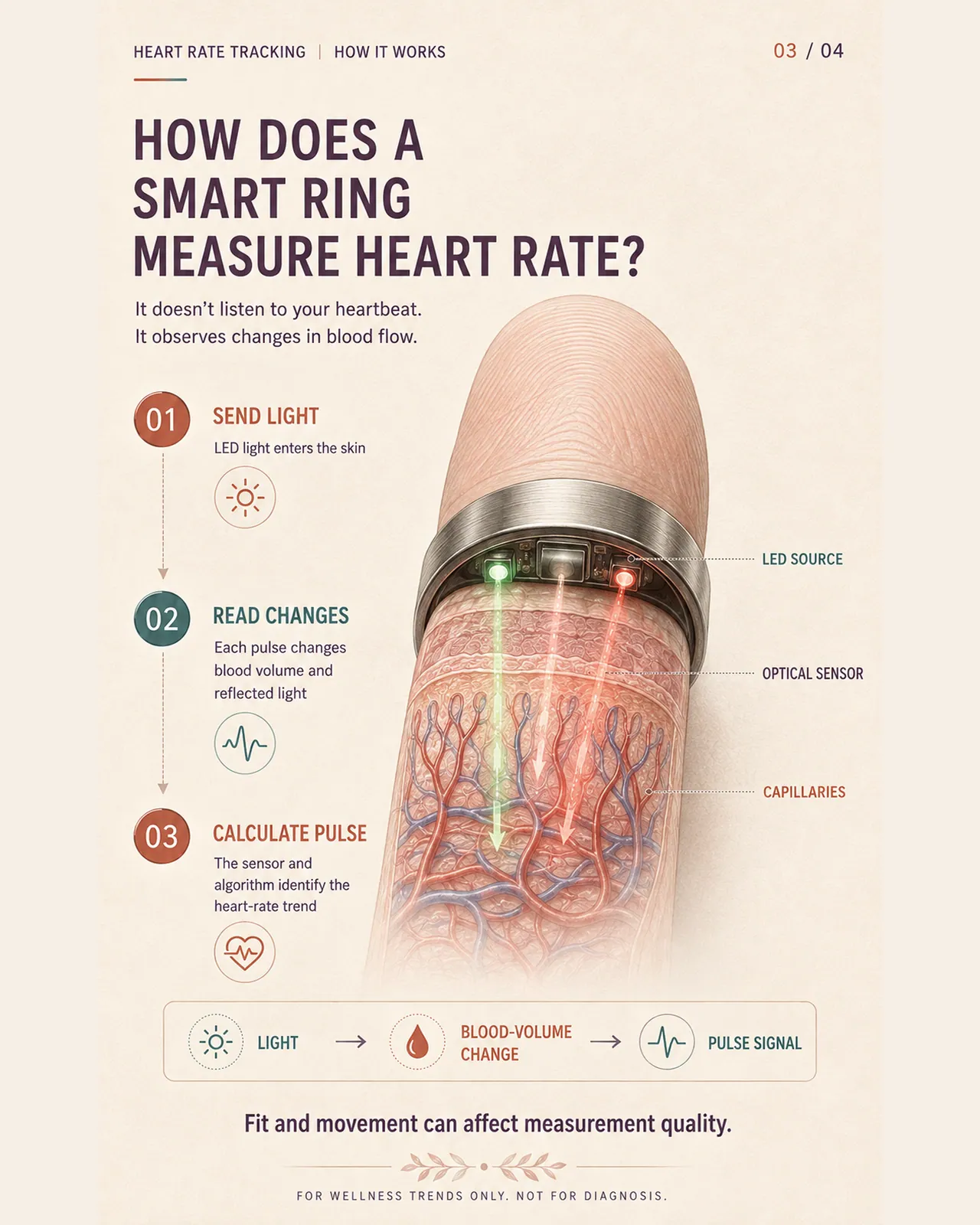
It does not “listen” to your heartbeat, and it is not an ECG or a tool for diagnosing heart-rhythm conditions. Its value is helping you observe heart-rate patterns during rest, activity, and sleep—and understand when those changes occur.
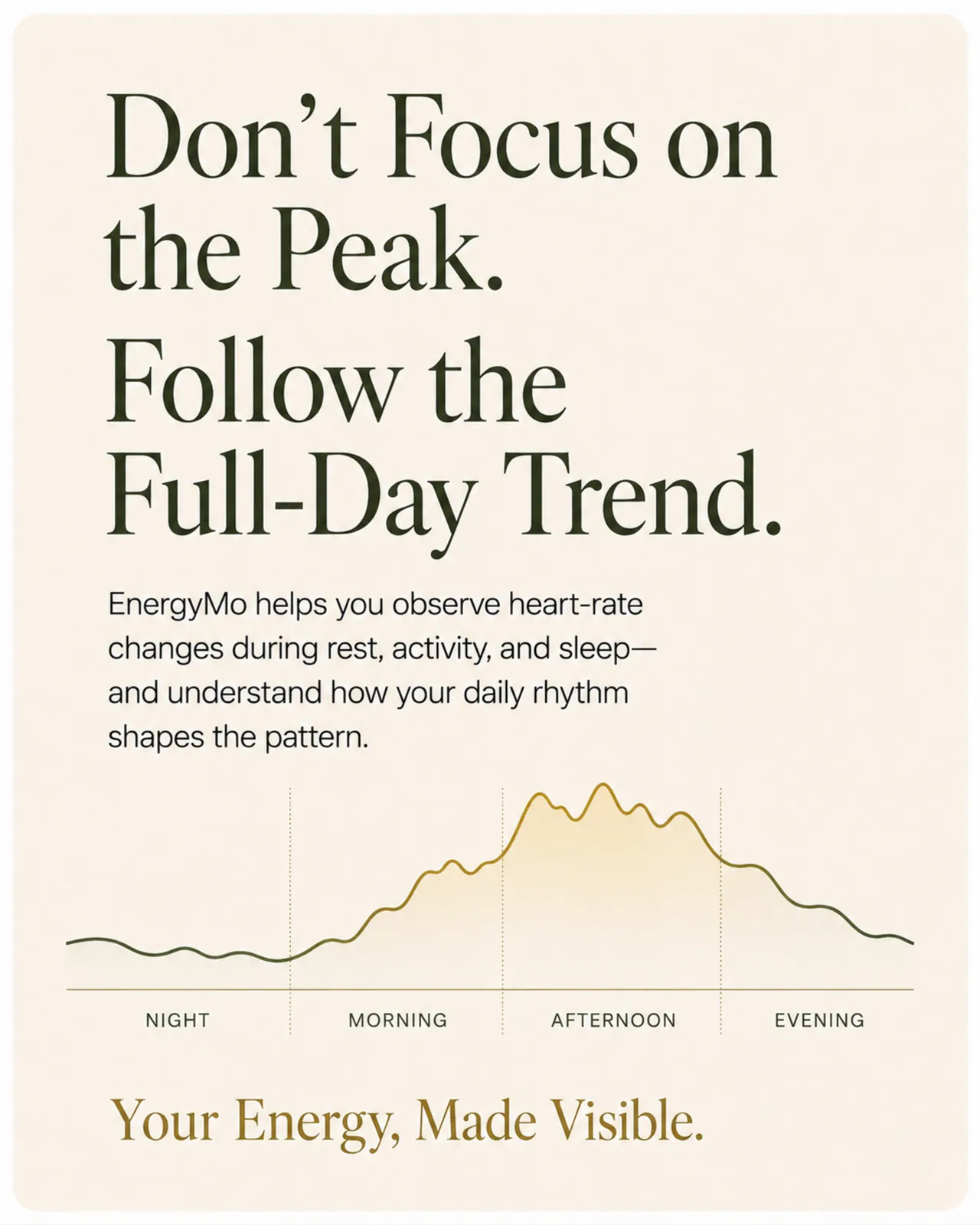
Do not judge your heart rate only by the highest number of the day. A full-day trend provides more context than a single moment.
Have you ever noticed your heart suddenly racing while you were sitting still?
Discover the EnergyMo Smart Ring: www.energymo.ai
EnergyMo provides wellness trend information and is not intended to diagnose medical conditions or replace an ECG or professional medical care. Seek urgent medical attention for chest pain, fainting, or severe shortness of breath.
#EnergyMo #SmartRing #HeartRateTracking #HeartRacing #RestingHeartRate #SmartRingHeartRate #WearableHealth
Continue with the complete guide
“Heart racing” is a sensation; a ring reports an estimate
Palpitations can feel fast, pounding, fluttering, skipped or irregular. The sensation and the number on a wearable do not always match. You may strongly notice a normal-rate heartbeat, or a device may briefly show a high value because motion or poor contact distorted the optical pulse signal.
A smart ring’s PPG sensor observes peripheral pulse waves. It is useful for timing and trend context, but it is not a continuous diagnostic ECG and cannot determine the rhythm responsible for a symptom.
Check the reading without delaying appropriate care
If you otherwise feel well, sit quietly, keep the hand still and check whether the ring is positioned correctly. If practical, count your pulse manually for 30–60 seconds and note whether it feels regular. Do not repeatedly refresh the app or tighten the ring excessively; anxiety and poor contact can make the situation harder to interpret.
The following require urgent medical help rather than wearable troubleshooting: palpitations that do not settle when accompanied by chest pain, severe shortness of breath, fainting or feeling close to fainting. Follow local emergency guidance.
Common context is not the same as a confirmed cause
Strenuous exercise, lack of sleep, stress, anxiety, caffeine, alcohol, nicotine and some medicines commonly coincide with palpitations. Fever, anaemia, thyroid conditions and heart-rhythm disorders are among other possibilities. A list cannot identify what is happening to one person.
Recurrent episodes, episodes lasting more than a few minutes, or symptoms in someone with a heart condition or relevant family history should be discussed with a clinician. A normal ring trend does not rule out an intermittent rhythm problem.
Create a record that is actually useful
| Record | Example detail |
|---|---|
| Start and stop | 14:20, lasted about 6 minutes |
| Activity and posture | Sitting after lunch; stood up shortly before onset |
| Sensation | Fast and regular, or fluttering/skipped |
| Ring data | Range shown, gaps, sudden step or gradual rise |
| Manual pulse | Approximate rate and whether regular, if safely checked |
| Associated symptoms | Chest discomfort, breathlessness, dizziness, sweating, none |
| Recent context | Sleep, caffeine, alcohol, illness, exercise, new medication |
Screenshots can help preserve timing, but export or summarize only the relevant interval. The value of the record is the connection between symptom, time and context—not a large pile of unlabelled data.
How to recognize likely signal artifact
An instantaneous spike with simultaneous movement, a gap immediately before it, an implausibly sharp up-and-down edge, or repeated changes when ring contact shifts can suggest artifact. A smooth rise that aligns with a real pulse and symptoms is more credible, but still does not identify the rhythm. When safety is in question, symptoms take priority over judging the graph.
Frequently Asked Questions
Can a smart ring detect atrial fibrillation or another arrhythmia?
Do not assume that a general wellness heart-rate trend can diagnose or exclude an arrhythmia. Diagnostic claims depend on the specific regulated feature and validation. EnergyMo heart-rate trends are not a diagnostic ECG.
Why does my heart feel fast when the ring number is normal?
Awareness of force, irregularity or isolated extra beats may feel dramatic without a high average rate. The wearable may also average across a window and miss a brief event.
Should I avoid caffeine forever after one episode?
One episode cannot prove caffeine was the cause. Record amount and timing and discuss recurrent symptoms professionally rather than applying a permanent rule from one event.
Sources and Further Reading
- NHS: heart palpitations and when to seek help
- JACC: interpretation and limitations of consumer wearables
- Review of wearable measurement of individual heart-rate responses
Continue Exploring
- Why resting heart rate can be higher today
- How a smart ring measures heart rate
- Explore EnergyMo Ring Pro
This article is general education. It does not diagnose or exclude an arrhythmia or other medical condition.