

Most people check their heart rate. Fewer pay attention to HRV—heart rate variability.
HRV is not the number of beats per minute. It describes the tiny changes in time between neighboring heartbeats. Those changes are influenced by the autonomic nervous system and can provide context on whether the body is leaning more toward strain and response, or rest and recovery.
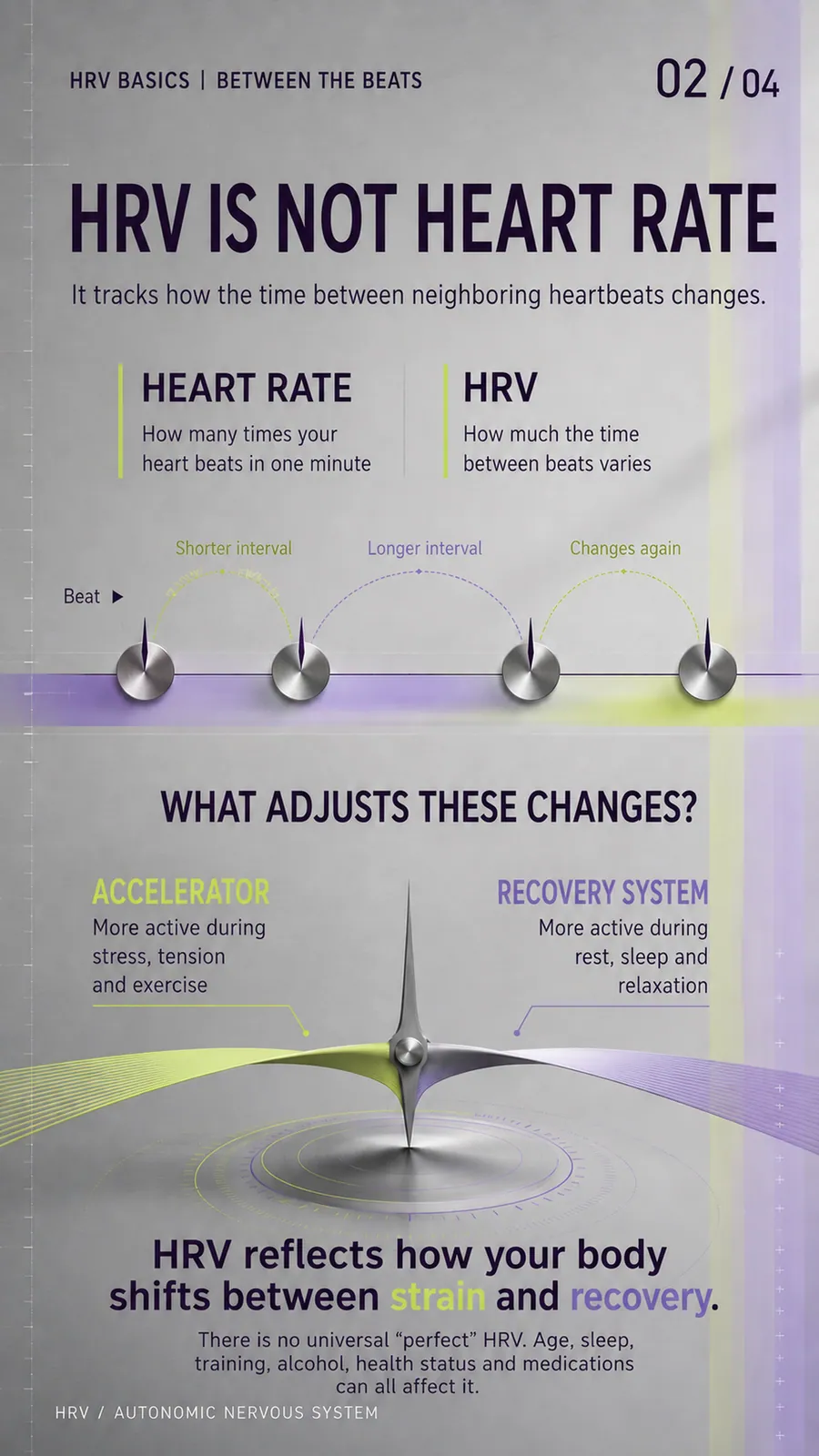
There is no universal “perfect” HRV. Age, sleep, training load, alcohol, late nights, illness and some medications can all affect it. Instead of comparing your number with someone else’s, look at whether it remains within your usual range and how it changes across several nights.
Continuous smart-ring wear can record HRV during relatively still periods such as sleep. Viewed with resting heart rate, sleep and temperature trends, it can help you explore:
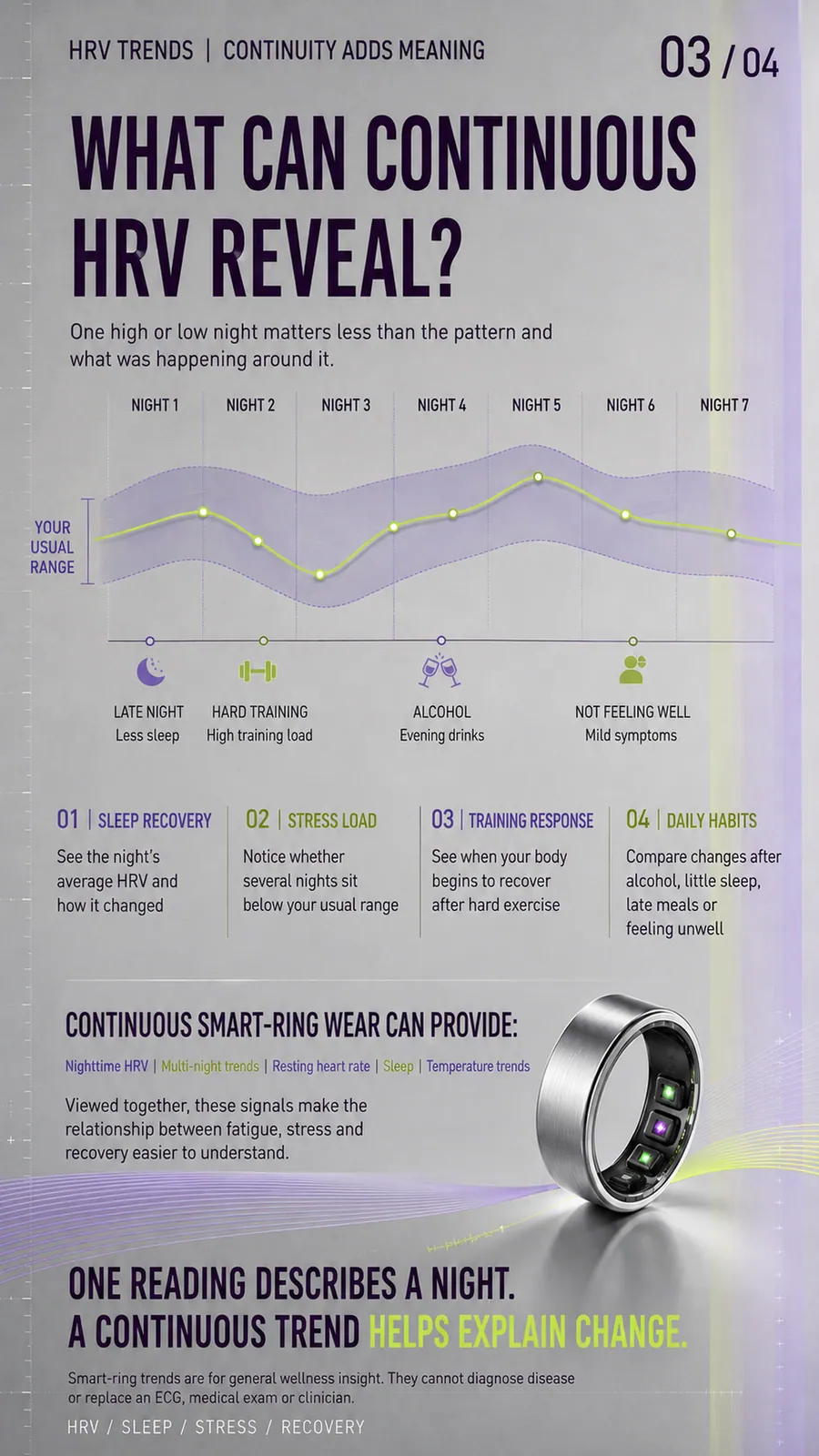
Whether your body recovered after sleep
Whether stress and fatigue may be building up
When you begin returning to your usual state after hard training
How your body responds after alcohol, little sleep or late meals
One reading describes a night. A continuous trend gives the change more context.
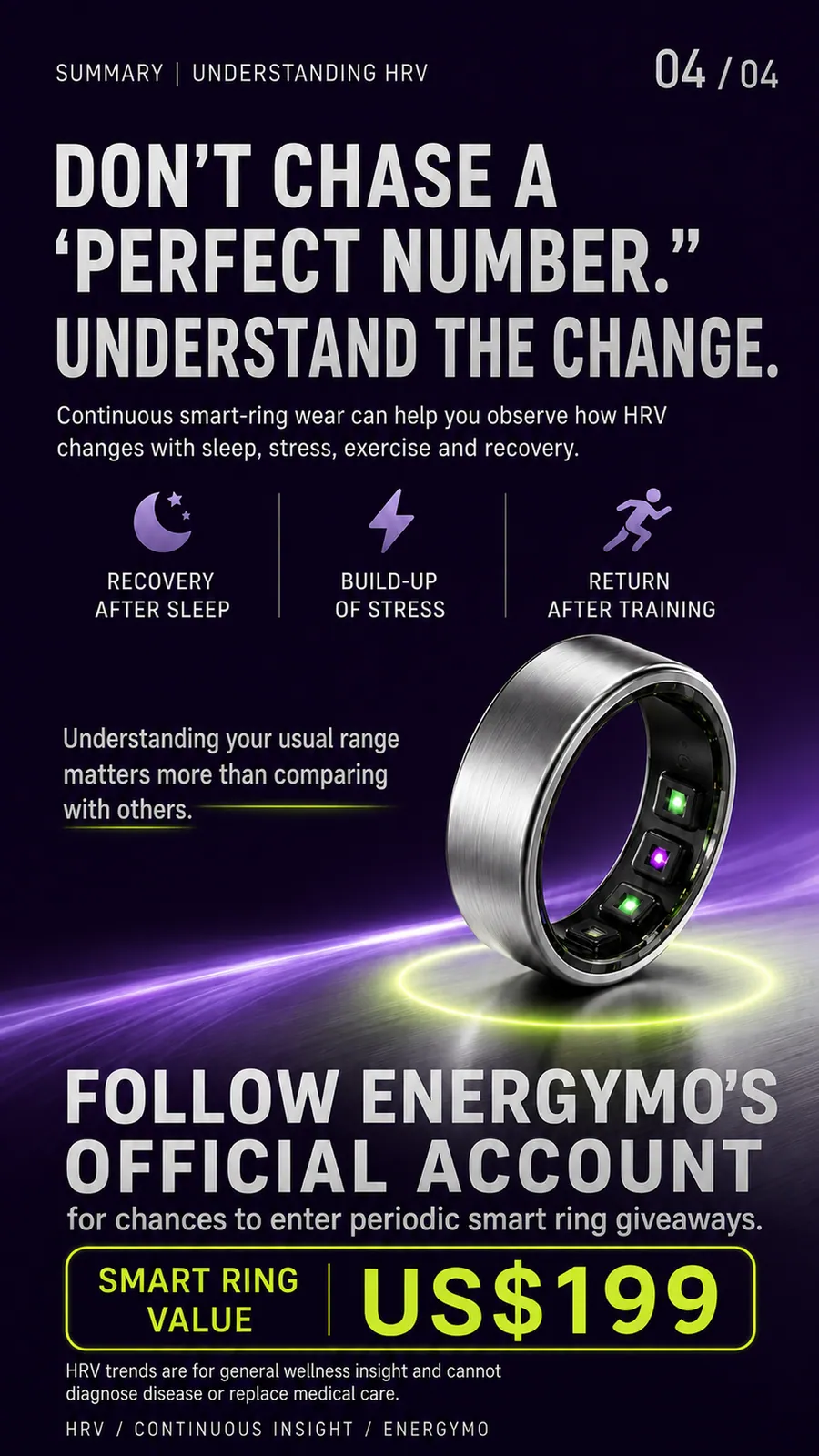
Follow EnergyMo’s official account for chances to enter periodic smart ring giveaways. Smart ring value: US$199.
Wellness note: HRV trends cannot diagnose disease or replace an ECG, medical exam or professional medical care. Speak with a clinician if you have ongoing concerns or symptoms.
Continue with the complete guide
Read a personal trend, not a universal target
Heart rate is the number of beats per minute. HRV describes variation in the timing between beats. Both respond to many influences, including sleep, training load, alcohol, caffeine, hydration, medication, illness, travel, emotion, posture, and measurement conditions. A value that is typical for one person may not be typical for another.
Compare readings from the same device and similar time window with your own established range. A single rise or drop is a prompt to check context, not proof of a cause. Repeated changes that align with fatigue, disrupted sleep, or a demanding training block may support a more conservative day, but the ring cannot identify why the change occurred.
Separate data quality from body change
Before interpreting a surprising result, check fit, movement, hand temperature, battery, sensor cleanliness, and missing segments. Optical measurements can be affected by poor contact and motion. If the signal looks incomplete, improve the measurement conditions and compare subsequent readings instead of forcing a conclusion.
Chest pain, fainting, severe shortness of breath, new neurological symptoms, or persistent palpitations require timely medical attention regardless of a wearable score.
Frequently Asked Questions
Is higher HRV always better?
No. HRV differs substantially between individuals. Direction relative to your own baseline and the surrounding context are more useful than a universal target.
Can low HRV diagnose illness or a heart problem?
No. HRV is influenced by many ordinary and medical factors and cannot diagnose or exclude a condition by itself.
Why do my ring and watch disagree?
Devices may use different sensors, algorithms, sampling windows, and filtering. Compare trends within one device rather than mixing absolute values.
Sources and Further Reading
Continue Exploring
This article is general wellness education. Consumer wearable data does not diagnose, treat, or rule out disease.
EnergyMo products are consumer wellness devices, not medical devices. They are not intended to diagnose, treat, cure, or prevent any disease. Information provided is not medical advice.
Track what your body is telling you
EnergyMo Ring brings sleep, recovery, and daily movement into one discreet wearable.