

You hit snooze three times and still wake up drained. By mid-afternoon your brain feels offline. After work, the couch is all you can manage—and even a long weekend sleep-in does not reset you. Feeling tired when you “did nothing” is not the same as being lazy.
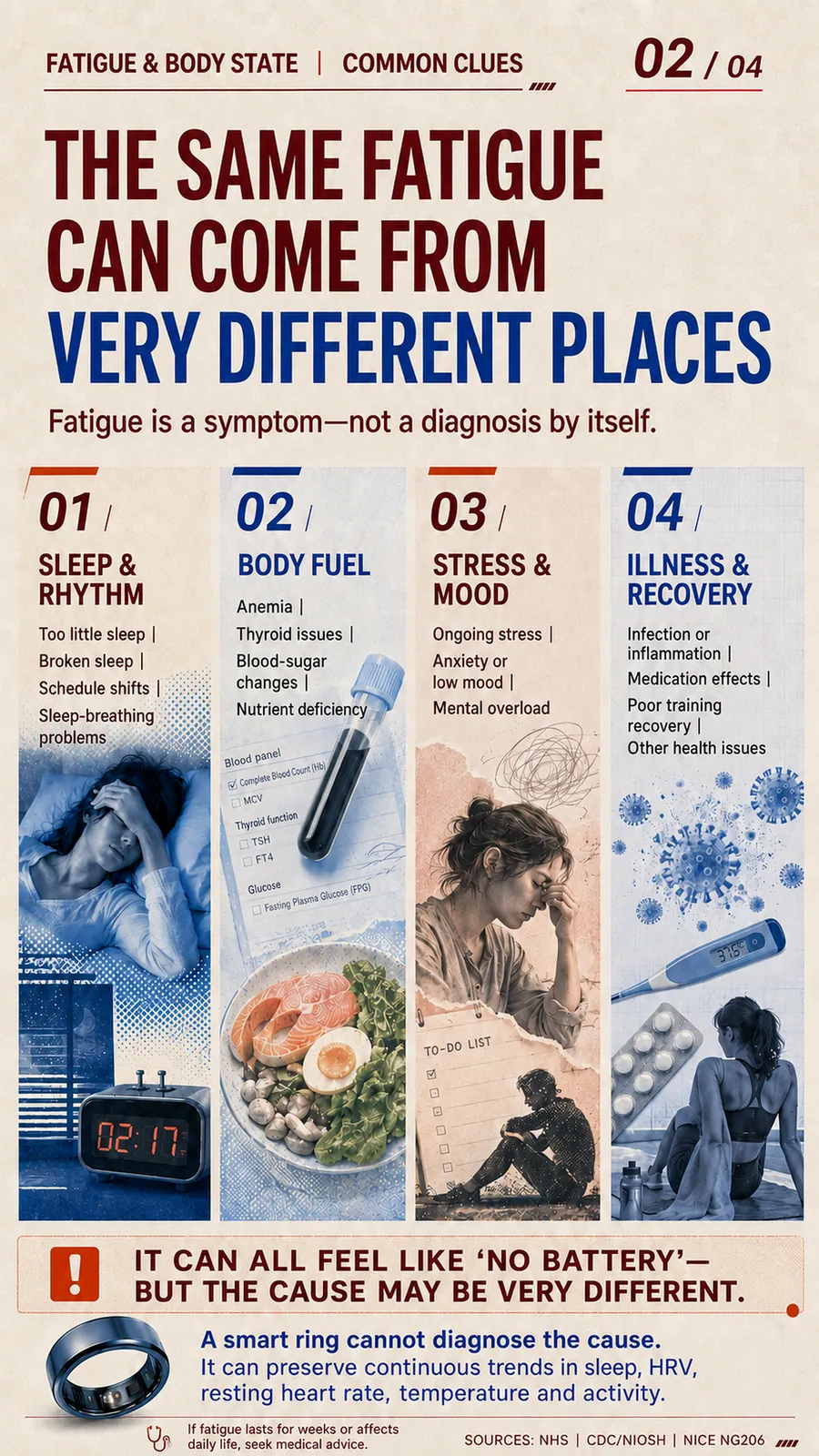
Fatigue is a symptom, not a diagnosis. Short or disrupted sleep, stress and emotional load, recent illness and recovery, anemia or thyroid problems, medications, alcohol, and training load can all play a part. A single reading rarely explains why. The more useful questions are when the change began, how long it lasted, and which signals shifted together.
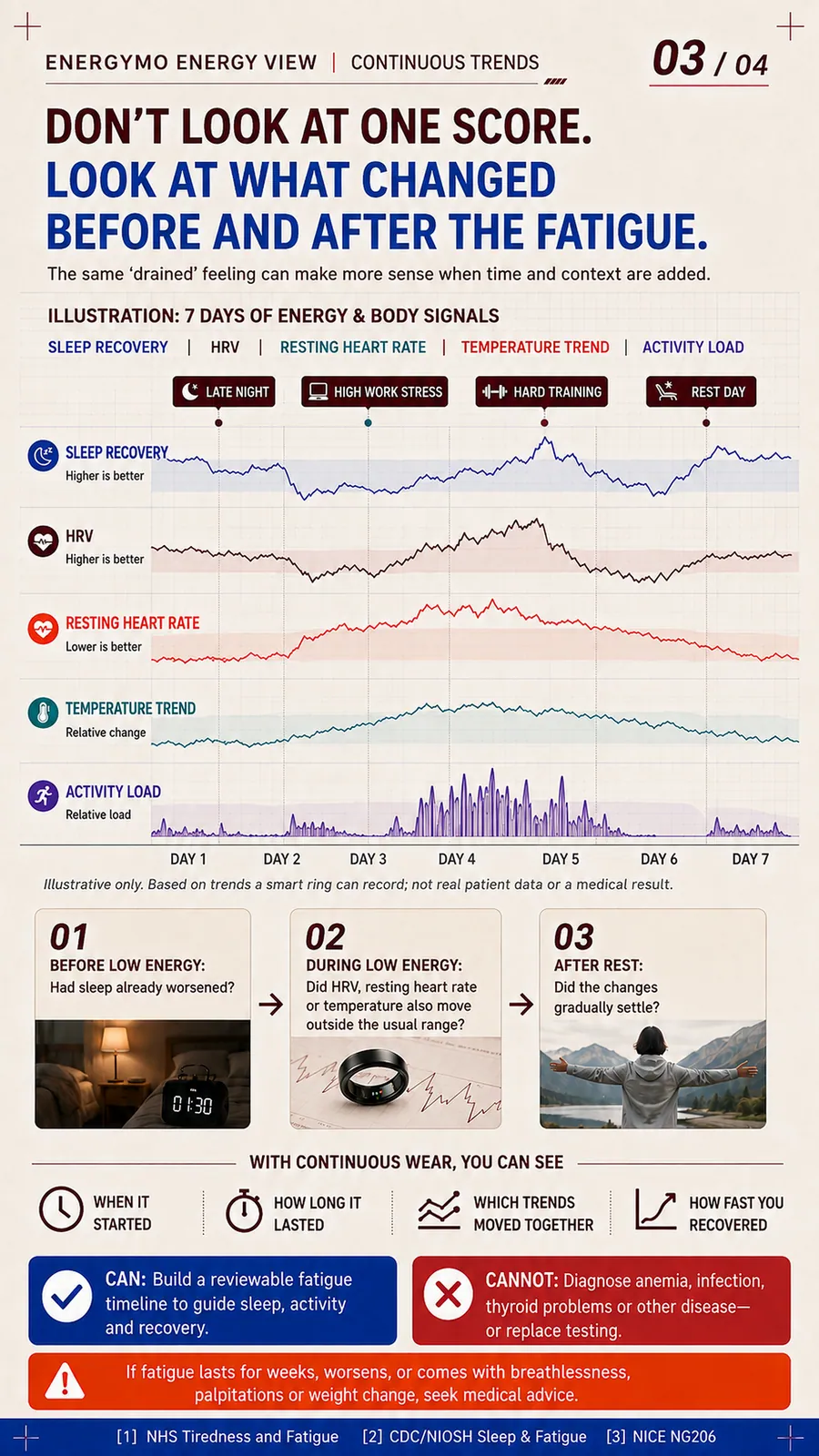
Wearing the EnergyMo smart ring continuously tracks sleep, HRV, resting heart rate, temperature trends, and activity. Its multi-signal trend analysis turns those changes into an Energy Level view—helping you see whether tired days coincide with poorer sleep recovery, a higher resting heart rate, lower HRV, or temperature moving outside your usual range; whether rest is followed by recovery; and which lifestyle changes happened at the same time.
A smart ring provides trend clues—not a diagnosis—and does not replace medical care. Seek medical advice if fatigue lasts for weeks, is getting worse, or comes with breathlessness, chest pain, marked palpitations, fainting, or unexplained weight change.
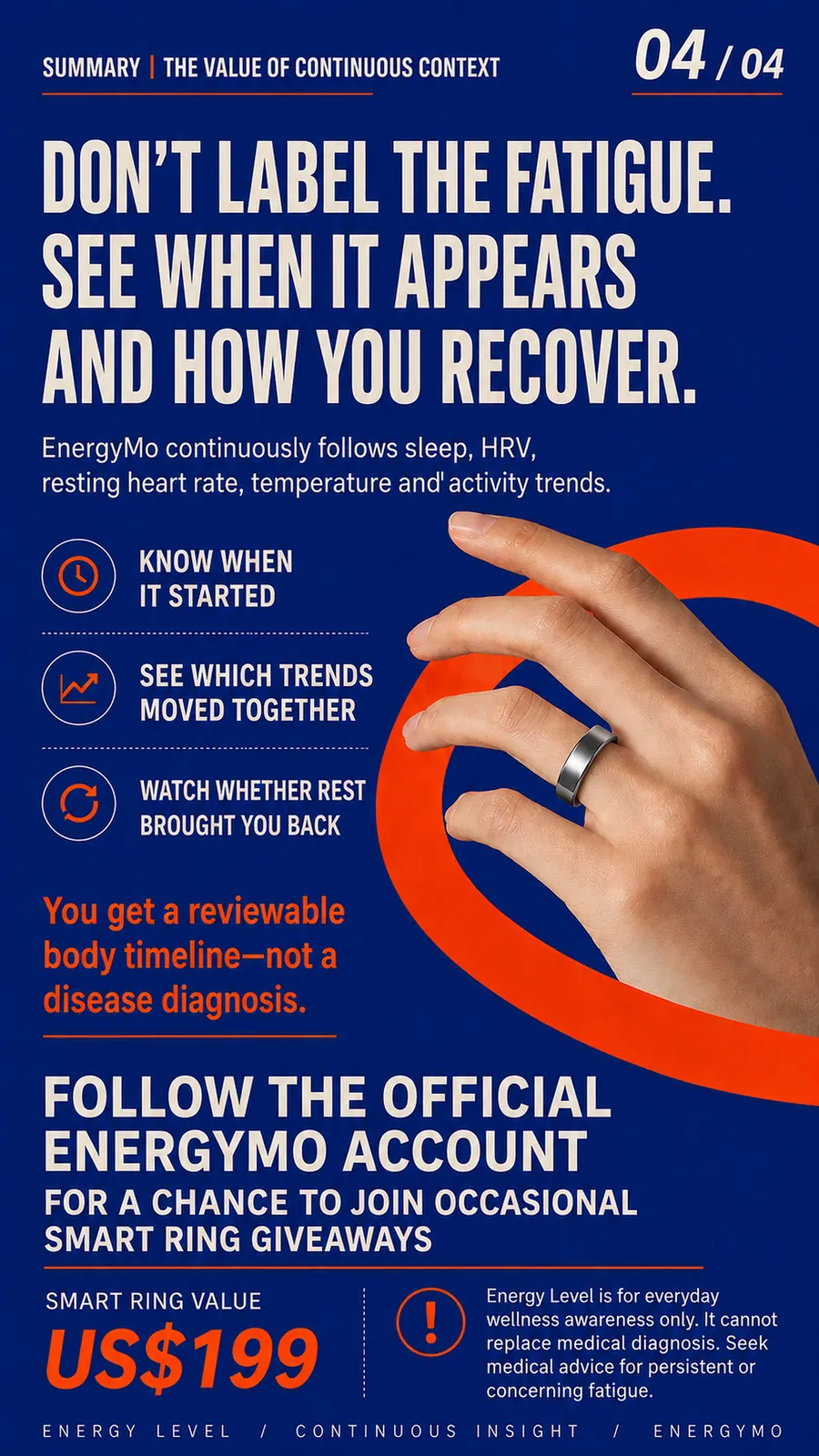
Follow the official EnergyMo account for chances to join occasional smart ring giveaways. Ring value: US$199.
#EnergyMo #SmartRing #EnergyLevel #Fatigue #Sleep #HRV #RestingHeartRate #HealthTrends
Educational sources
NHS — Tiredness and fatigue: https://www.nhs.uk/symptoms/tiredness-and-fatigue/
CDC/NIOSH — Sleep and fatigue education: https://www.cdc.gov/niosh/work-hour-training-for-nurses/longhours/mod3/02.html
NICE NG206 — ME/CFS assessment and management: https://www.nice.org.uk/guidance/ng206
For health education only; not for diagnosis or treatment.
Continue with the complete guide
First ask: sleepy, fatigued or overloaded?
These experiences overlap but are not identical. Sleepiness is a tendency to fall asleep. Fatigue is reduced physical or mental capacity even when you may not doze off. Overload can feel like low energy because attention, decisions and emotional strain consume resources. Naming the experience changes what is worth observing.
Being in your twenties does not make persistent fatigue trivial. Short sleep is common, but “I am young” is not an explanation. Schedule drift, shift work, alcohol, irregular meals, stress, recent illness and medication can all contribute. So can conditions that need clinical assessment; a wearable cannot sort these causes out.
A seven-day record that is useful in a consultation
Record bedtime, estimated sleep onset, wake time, awakenings, caffeine and alcohol timing, activity, menstrual context where relevant, and two ratings: sleepiness and fatigue from 0–10. Add when the problem is worst and what it prevents you from doing. Keep the ring fit consistent and mark missing nights. This record is more informative than a screenshot of one low score.
Look for patterns, not a diagnosis: insufficient sleep opportunity, a large weekday–weekend shift, repeated fragmented nights, or fatigue that remains despite adequate time in bed. Change one low-risk factor at a time for several days; otherwise you cannot tell what helped.
When not to self-experiment
Arrange medical advice when unexplained fatigue lasts several weeks, affects daily life, or accompanies weight change, mood change, breathlessness, palpitations, unusual thirst, loud snoring, gasping or choking during sleep. Seek urgent help for severe breathing difficulty, chest pain, fainting, new neurological symptoms or thoughts of self-harm. Do not use a ring trend to rule out anaemia, thyroid disease, diabetes, sleep apnoea, infection or another condition.
Sources
- NHS: tiredness and fatigue
- CDC: sleep in adults
- FDA policy for low-risk general wellness products
- Explore EnergyMo sleep and recovery features
This is general education, not medical advice or diagnosis.
Frequently Asked Questions
Can a smart ring explain why I feel tired every day?
No. It can organize sleep timing, activity, resting heart rate and HRV trends, but those signals do not identify a cause. A short symptom and routine diary can make the data more useful when discussing persistent fatigue with a clinician.
When should persistent tiredness be medically assessed?
Seek professional assessment when fatigue persists, worsens, limits normal activities or occurs with symptoms such as chest pain, fainting, severe shortness of breath, new neurological symptoms or major mood changes. A reassuring wearable score should not delay care.
EnergyMo products are consumer wellness devices, not medical devices. They are not intended to diagnose, treat, cure, or prevent any disease. Information provided is not medical advice.
Track what your body is telling you
EnergyMo Ring brings sleep, recovery, and daily movement into one discreet wearable.