

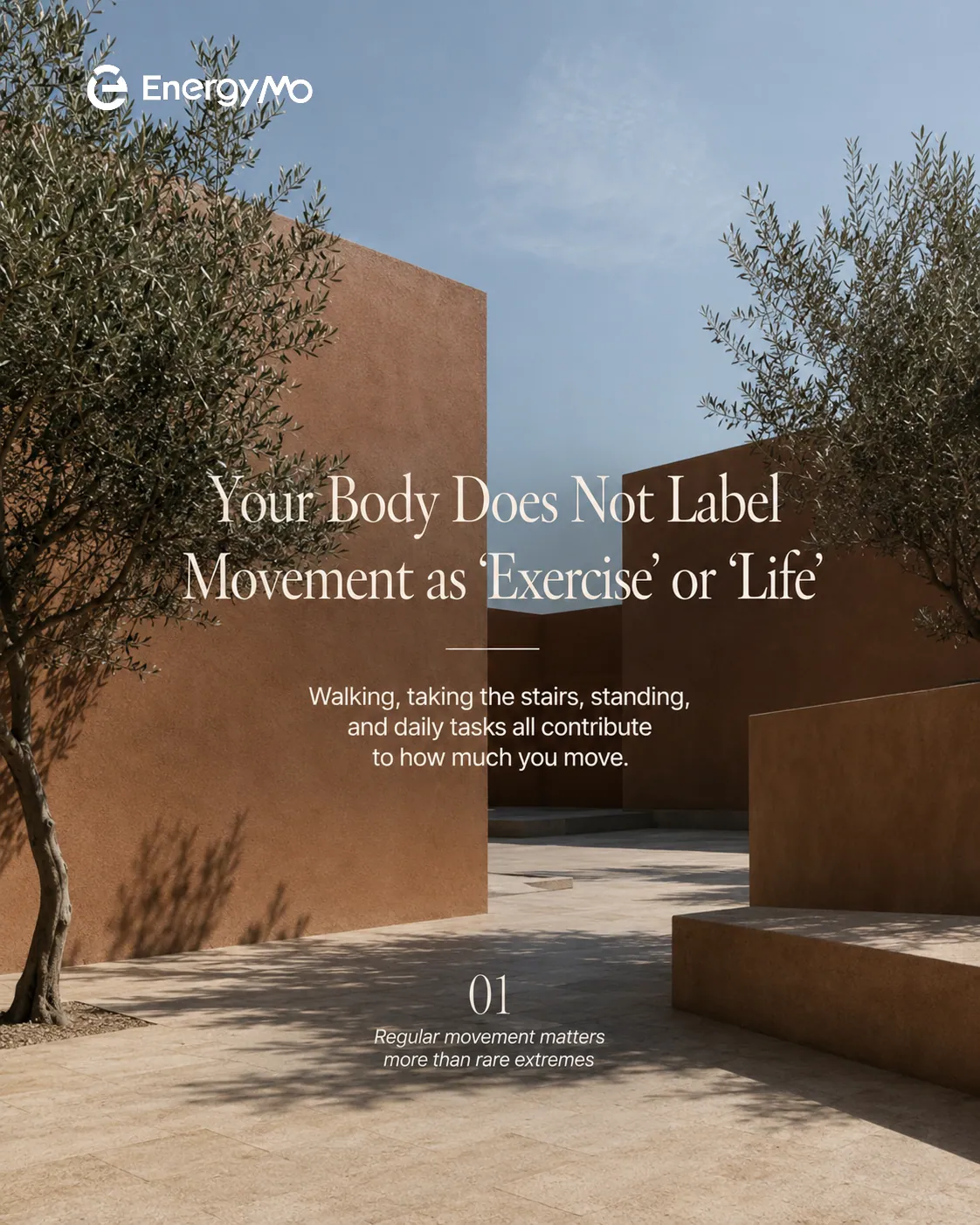
Taking the stairs, walking to lunch, standing during the day, doing household tasks, and moving between meetings all contribute to your daily activity.
What matters isn’t always how intense one workout feels. Regular movement across the day can be a more repeatable part of your routine.
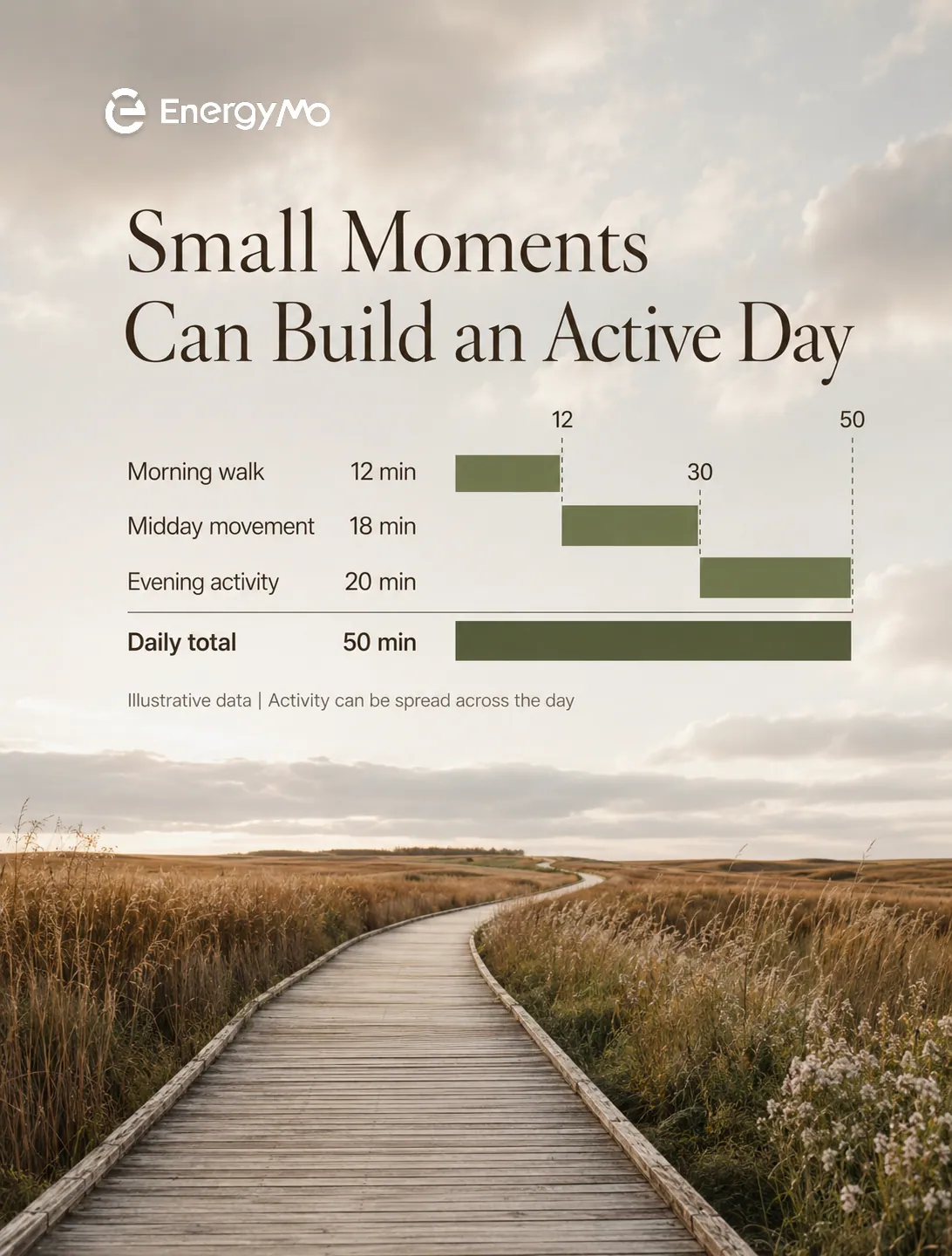
Try breaking activity into smaller moments
Morning walk: 12 minutes
Midday movement: 18 minutes
Evening activity: 20 minutes
Together, those moments build a 50-minute active day.
Simple ways to move more
Stand and move after 60–90 minutes of sitting
Walk short distances when it works for you
Add a relaxed walk after lunch
Adjust activity to how recovered you feel
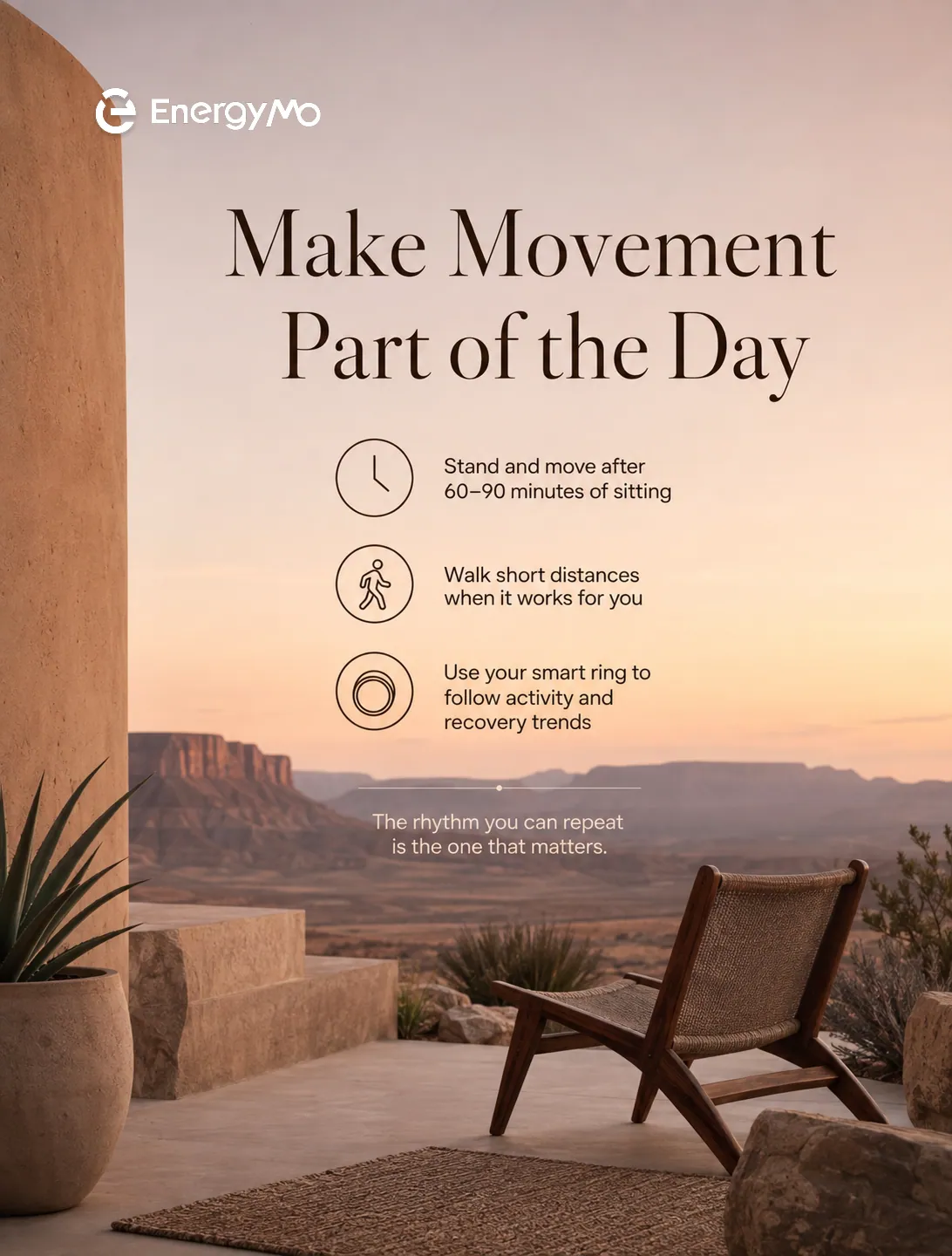
- Use a Smart Ring to follow activity, heart rate, and recovery trends
An activity tracking smart ring can help you understand movement beyond formal workouts. Read activity alongside sleep, resting heart rate, HRV, and recovery to see how everyday habits relate to your daily energy.
The rhythm you can repeat is the one that matters.
Smart Ring insights are intended for general wellness and do not replace professional medical or fitness advice.
Continue with the complete guide
Four ideas that are often mixed together
Physical activity is any bodily movement that raises energy use above rest. Exercise is the planned subset: a run, strength session or class. Sedentary time means waking time spent sitting or reclining with very little energy use. Steps are one convenient device estimate, not a complete definition of movement. Carrying groceries, taking stairs, cleaning and walking between meetings can matter even when none becomes a logged workout.
WHO guidance therefore uses a useful phrase: every move counts. It does not mean that two minutes of tidying replace aerobic and muscle-strengthening activity. It means health is shaped by the whole week, not only the time labelled “exercise.” A desk worker can complete a workout and still accumulate long uninterrupted sitting; someone else may have a physically active shift without recording a session.
Run a seven-day movement audit
For one normal week, mark four things: intentional training, walking or active transport, long sitting blocks, and physically demanding work or chores. Add context rather than chasing a perfect step total. On two comparable workdays, test one small change—walk during a call, use the stairs, or break a long sitting block—and look for a repeatable difference in movement minutes and how you feel.
A ring can miss pushing a stroller, cycling or carrying loads, and hand motion can sometimes inflate counts. Wear it consistently, compare within the same device and treat estimated calories as directional. The useful question is not “Did I win today?” but “Where can movement fit reliably into my real schedule?”
Sources and next steps
- WHO guidelines on physical activity and sedentary behaviour
- WHO report on measuring adult activity with wearables
- See how EnergyMo presents health trends
- Explore EnergyMo Ring Pro
This article offers general wellness information, not an individual exercise prescription. Seek professional advice before changing activity if symptoms or a health condition limit movement.
Frequently Asked Questions
Do short walks count if I already exercise?
Yes. Planned exercise and incidental movement answer different questions. Short walks can reduce uninterrupted sitting and add activity across the day, but they do not automatically replace recommended aerobic and strength work.
Why can my ring miss some physical activity?
Finger motion is not identical to whole-body effort. Cycling, carrying loads, pushing a stroller and gripping equipment can be underestimated, while repeated hand motion can sometimes add counts. Compare patterns within the same device instead of treating one total as exact.
EnergyMo products are consumer wellness devices, not medical devices. They are not intended to diagnose, treat, cure, or prevent any disease. Information provided is not medical advice.
Track what your body is telling you
EnergyMo Ring brings sleep, recovery, and daily movement into one discreet wearable.