

A lower sleep score, a higher resting heart rate, or a change in HRV does not automatically mean that something is wrong.
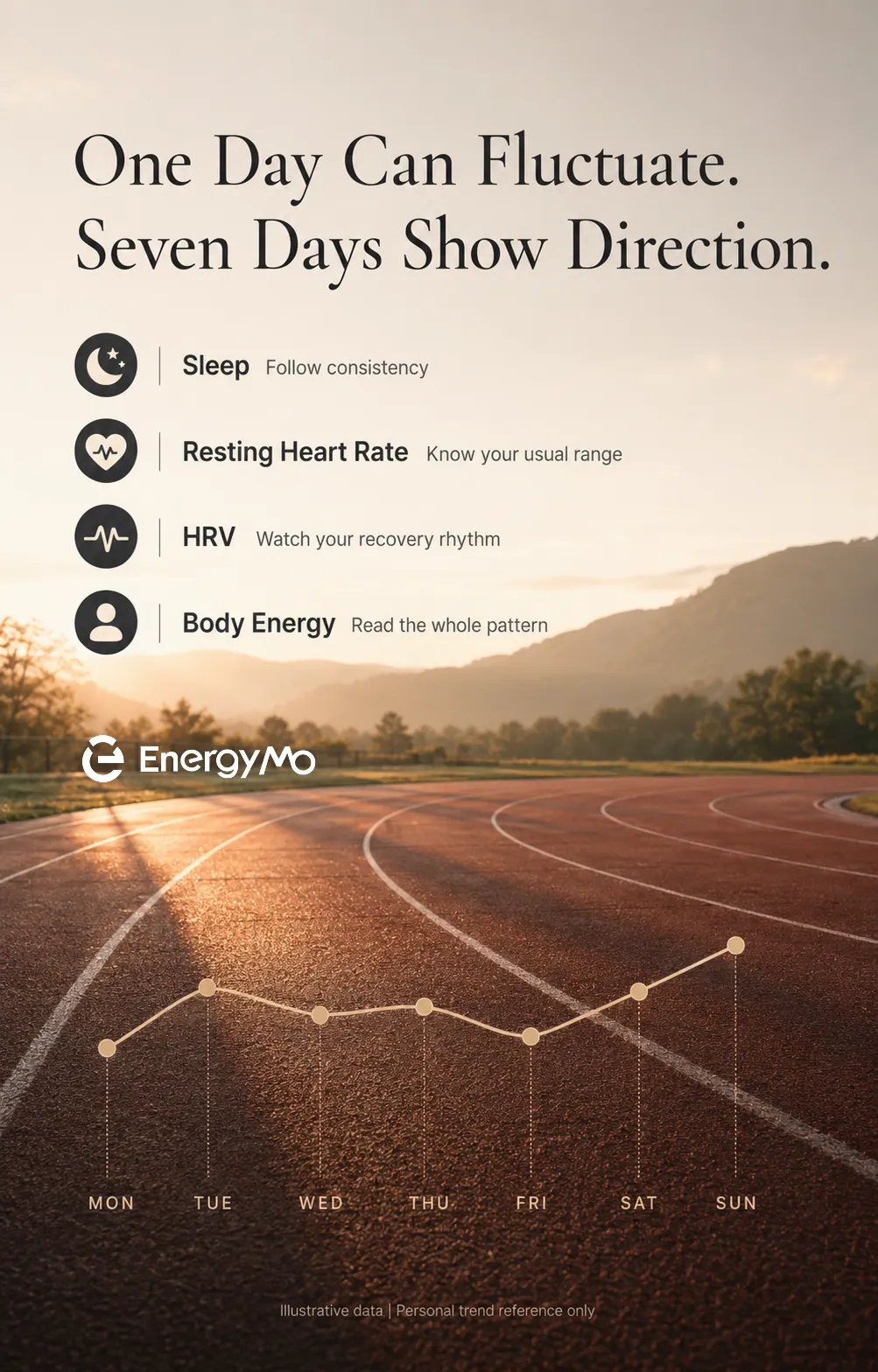
Daily data naturally fluctuates. What matters more is whether the same direction continues across several days.
When reviewing insights from your Smart Ring, consider the signals together:
Sleep: Follow timing, duration, and consistency
Resting heart rate: Learn your usual personal range
HRV: Watch whether your recovery rhythm shifts from baseline
Body Energy: Understand the combined influence of sleep, stress, and activity
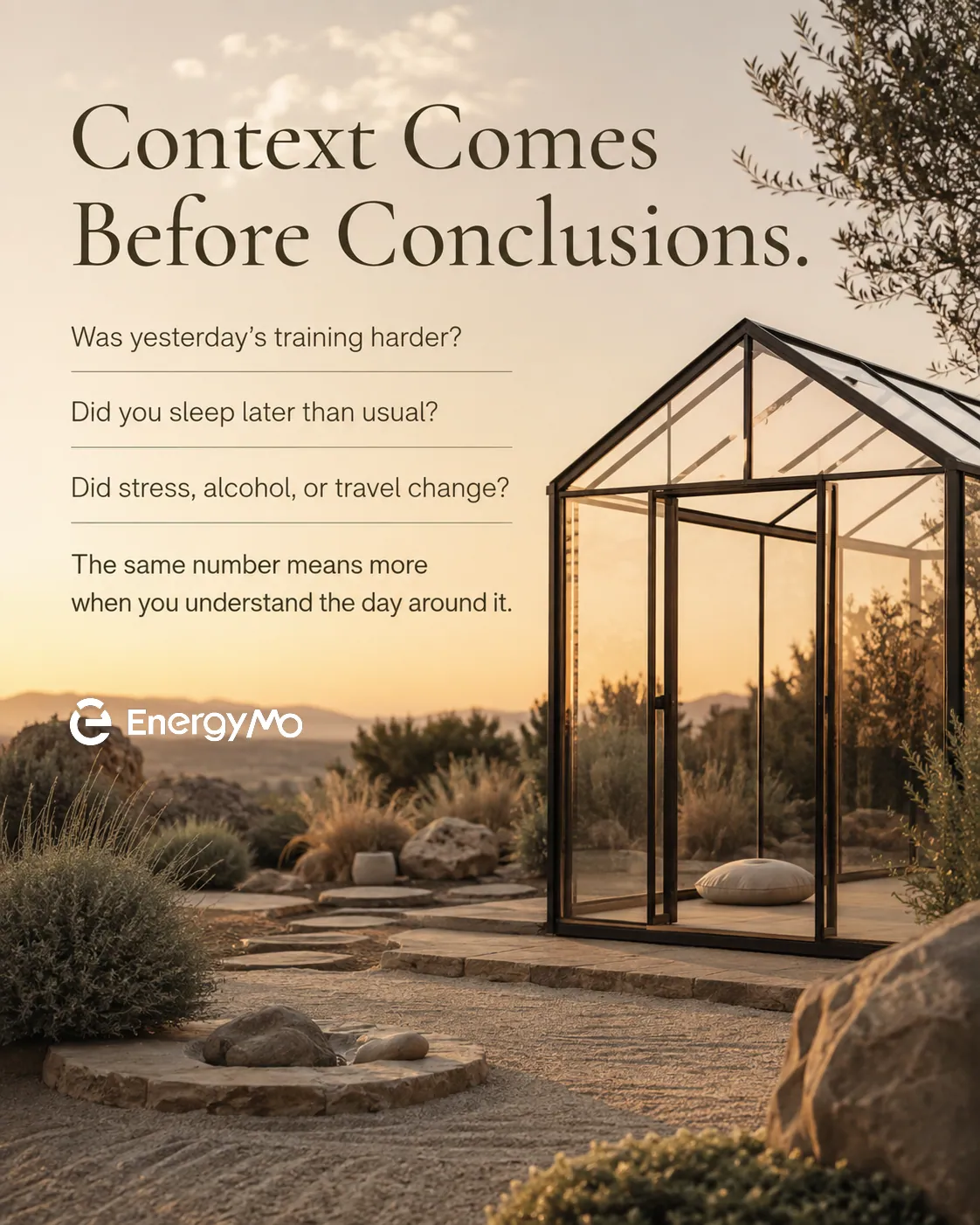
Before drawing a conclusion, consider the context around the number:
Was yesterday’s workout harder than usual?
Did you go to sleep later?
Did stress, alcohol, travel, or your sleep environment change?
The same number can mean something different when the surrounding day changes.
Four habits can help you build a more useful personal baseline:
Wear your ring consistently and comfortably
Follow the trend instead of one isolated high or low
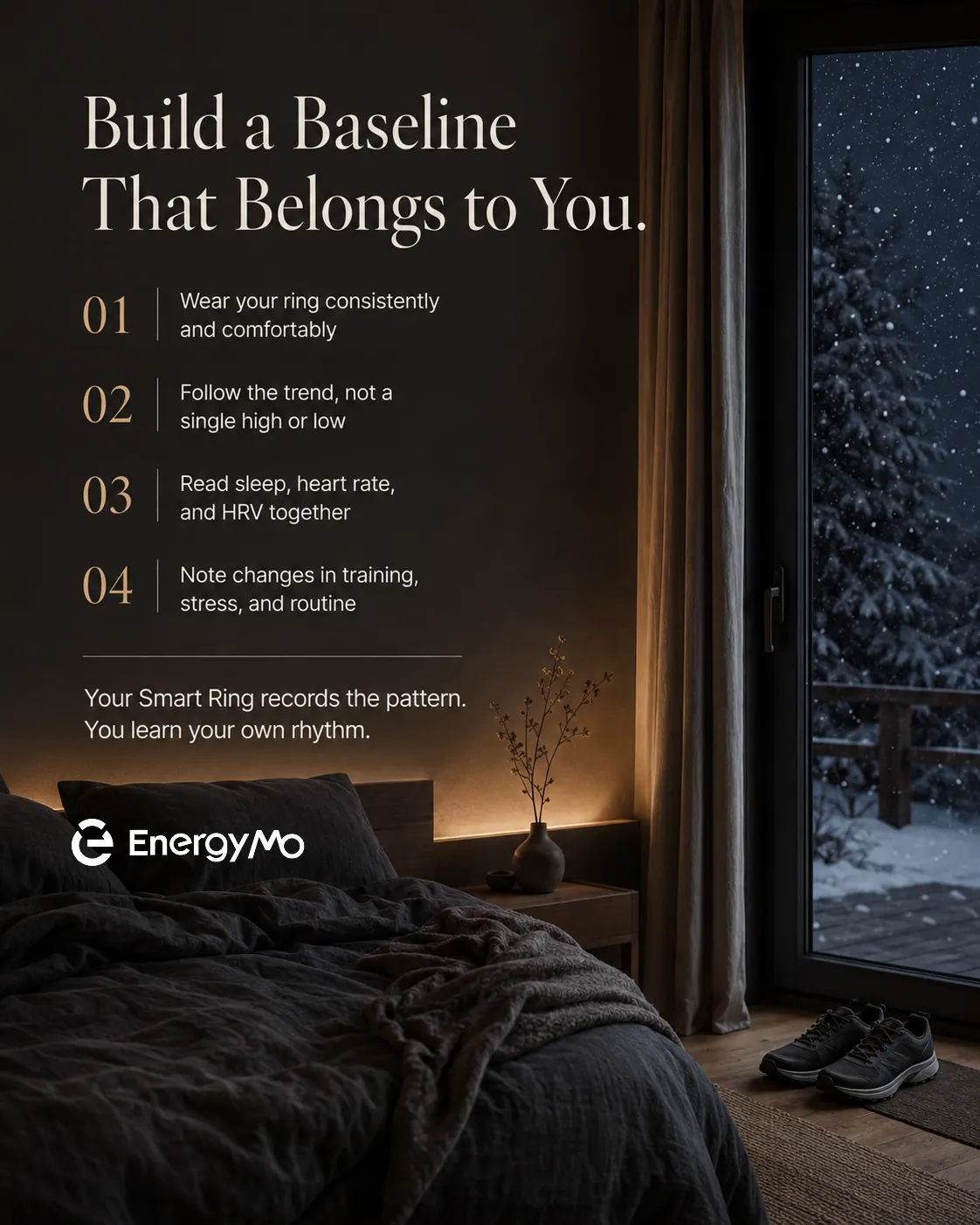
Review sleep, heart rate, and HRV together
Note changes in training, stress, alcohol, and routine
EnergyMo Smart Ring records the pattern so you can gradually understand your own rhythm.
Smart Ring insights are intended for personal wellness-trend reference and do not replace medical devices or professional diagnosis.
#SmartRing #EnergyMo #SmartRingHealth #SleepTracking #HeartRateMonitoring #HRVTracking #BodyEnergy #HealthTrends #RecoveryTracking #WearableTechnology
Continue with the complete guide
A single day contains signal, noise and circumstance
Daily wearable data are not a simple report card. The number may contain a real physiological change, ordinary biological variation, measurement error and the context of that day—all at once. A low night after travel, alcohol or a loose ring is not equivalent to a gradual shift that repeats under normal conditions.
This is why a personal baseline matters more than a population ranking. A baseline is not one average calculated forever. It should represent a reasonably stable period with consistent device use, then move slowly as routines, fitness, season or life stage change. Comparing across brands after a device switch can create an artificial “trend” because sensors, algorithms and summary windows differ.
Read a trend with three lenses
Level: Is the rolling median moving? A seven-day median reduces the influence of one unusual point.
Variability: Is the range becoming wider even if the median stays similar? Increasingly erratic sleep timing can be visible before the average changes.
Concordance: Do related signals move together? A repeated change in sleep continuity, resting heart rate and how you feel deserves more attention than one isolated metric.
Always inspect data completeness first. Missing nights are not neutral if the ring is more likely to be removed during travel, illness or charging. Annotate those circumstances rather than letting the graph silently treat them as ordinary.
A practical decision rule
- One unusual day: verify fit, coverage and context; avoid a major conclusion.
- Three to seven days in one direction: reduce avoidable load, protect routine and watch whether the pattern resolves.
- Two or more weeks across several signals: review the timeline and consider professional advice if symptoms, function or safety are affected.
- A sharp change with concerning symptoms: respond to the symptoms, not the graph, and seek appropriate care.
Use trends for small experiments: change one behaviour, choose a start date, keep other conditions as steady as practical and decide in advance what outcome you will examine. This protects against finding a convenient explanation after the fact.
Sources
- Wearables in health research: practical limitations
- Review of consumer wearable measurement accuracy
- Review discussing consecutive measurements and weekly HRV averages
- Explore EnergyMo trends
Consumer wearable trends support reflection; they do not diagnose, treat or exclude disease.
Frequently Asked Questions
How many days make a meaningful wearable trend?
There is no universal number. Start with several comparable days and extend the window when sleep, travel, illness, training or measurement conditions vary. A stable personal baseline usually becomes more useful than a population threshold.
Should I ignore a single unusual reading?
Do not diagnose from it, but do not automatically discard it either. Check fit, missing data and context, then watch what happens next. Act on symptoms and safety concerns regardless of whether the device confirms them.
EnergyMo products are consumer wellness devices, not medical devices. They are not intended to diagnose, treat, cure, or prevent any disease. Information provided is not medical advice.
Track what your body is telling you
EnergyMo Ring brings sleep, recovery, and daily movement into one discreet wearable.