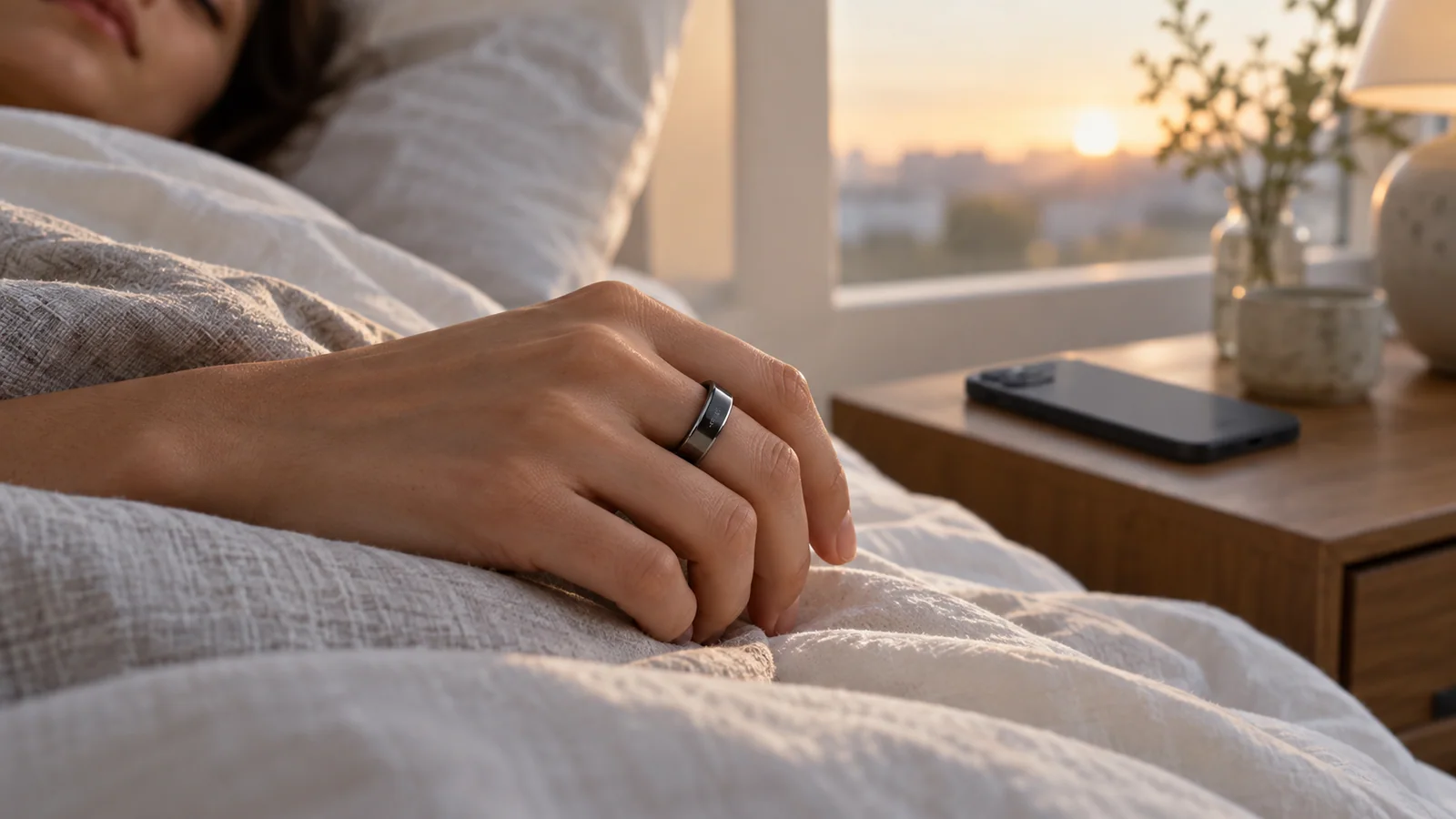
Your ring looks properly fitted—so why is part of your sleep, heart-rate, or wellness data occasionally missing?
Learn how finger choice, fit, temperature, movement, and consistent wear affect smart-ring comfort and signal continuity.
سلتك فارغة
جارٍ تحميل الصفحة…
نُجهّز لك المحتوى.
رؤى حول الصحة والتقنية وعلم العافية القابلة للارتداء.

Learn how finger choice, fit, temperature, movement, and consistent wear affect smart-ring comfort and signal continuity.

Learn how sleep timing, interruptions, habits, and personal baselines shape smart-ring sleep trends without treating estimates as a diagnosis.

Learn how sleep timing, interruptions, habits, and personal baselines shape smart-ring sleep trends without treating estimates as a diagnosis.

Learn how sleep timing, interruptions, habits, and personal baselines shape smart-ring sleep trends without treating estimates as a diagnosis.

Learn how sleep timing, interruptions, habits, and personal baselines shape smart-ring sleep trends without treating estimates as a diagnosis.

Learn how sleep timing, interruptions, habits, and personal baselines shape smart-ring sleep trends without treating estimates as a diagnosis.

A careful explanation of optical sensor trends, measurement limits, signal quality, and when a consumer reading should be confirmed.

Smart rings are generally better at estimating sleep timing and duration than exact sleep stages. Learn how validation studies measure accuracy, where errors occur and which nightly trends deserve the most confidence.

Smart rings estimate sleep from movement, pulse waves, heart rate, HRV, temperature and timing—not brain waves. Learn how the algorithm works, where stage errors come from and how to judge your own nightly data.

A smart ring may reveal oxygen and breathing-related trends, but most cannot diagnose sleep apnea. Learn what the data means and when to seek a sleep test.