
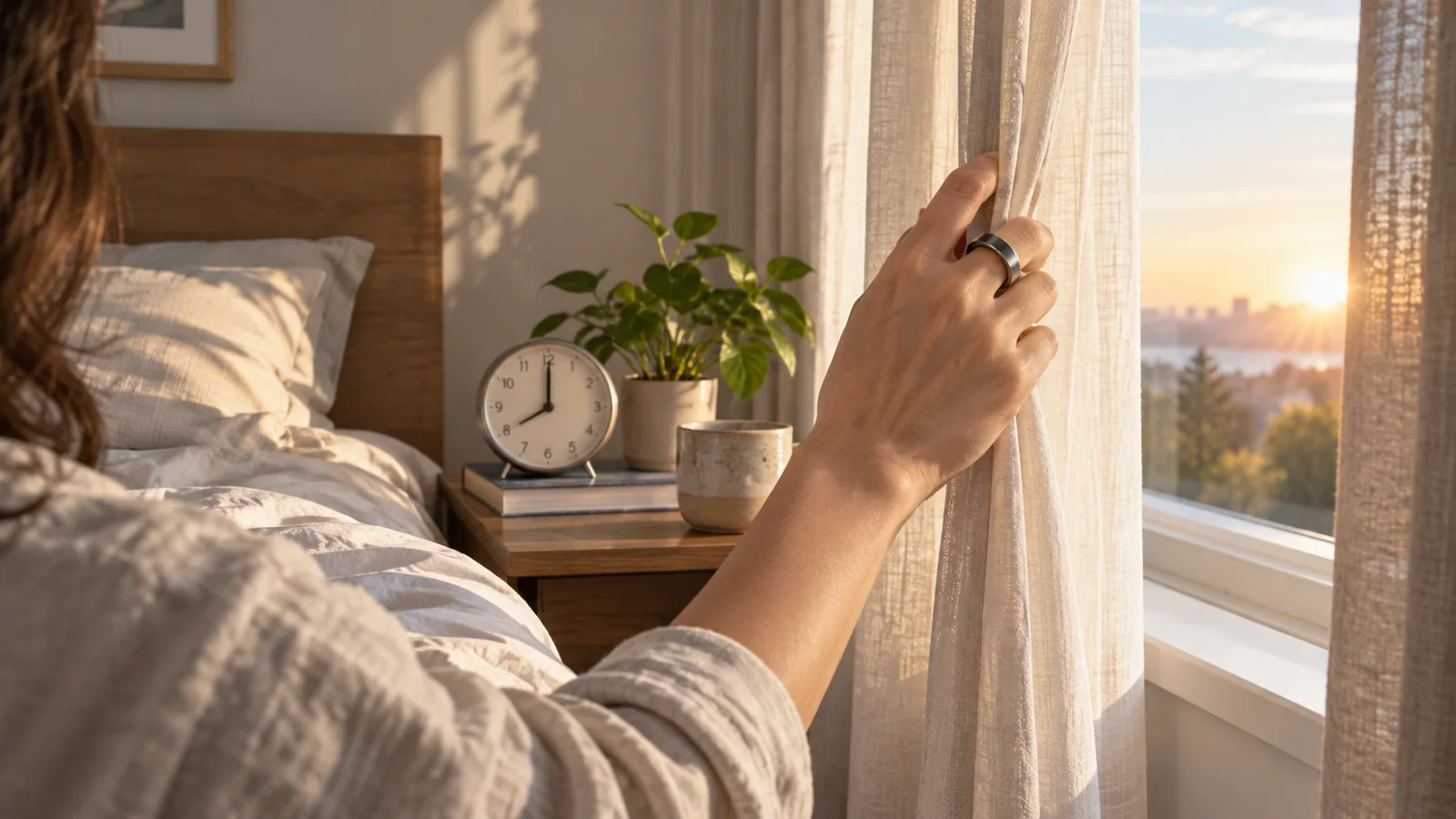
Sleep duration still matters. A relatively consistent wake-up time is also a useful anchor for the rhythm your body follows from one day to the next.
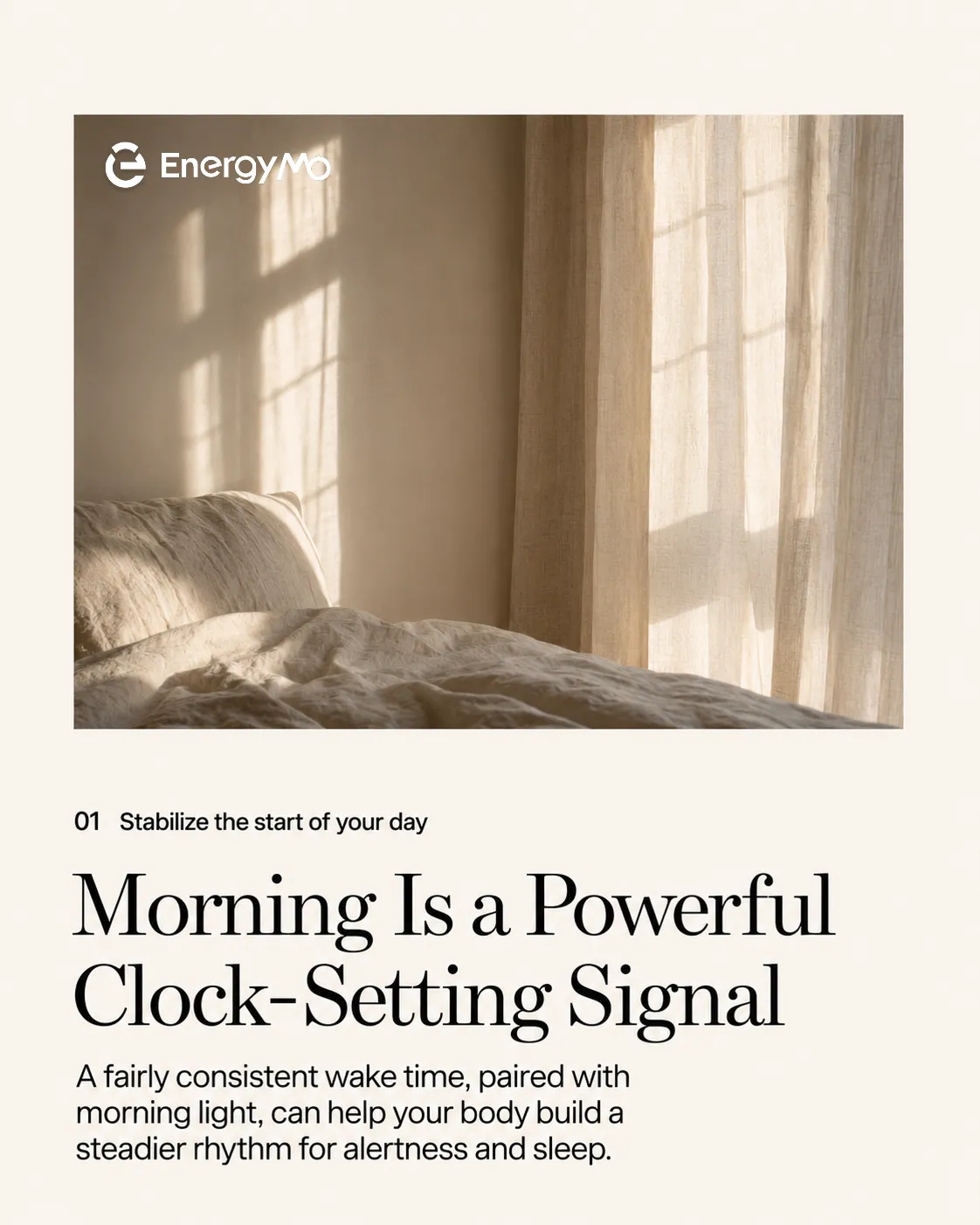
Morning tells the body the day has started
Waking around the same time each morning — and getting some natural light — is a clear “the day has begun” signal. Over time, both alertness and sleepiness can arrive more predictably.
What usually throws the rhythm off
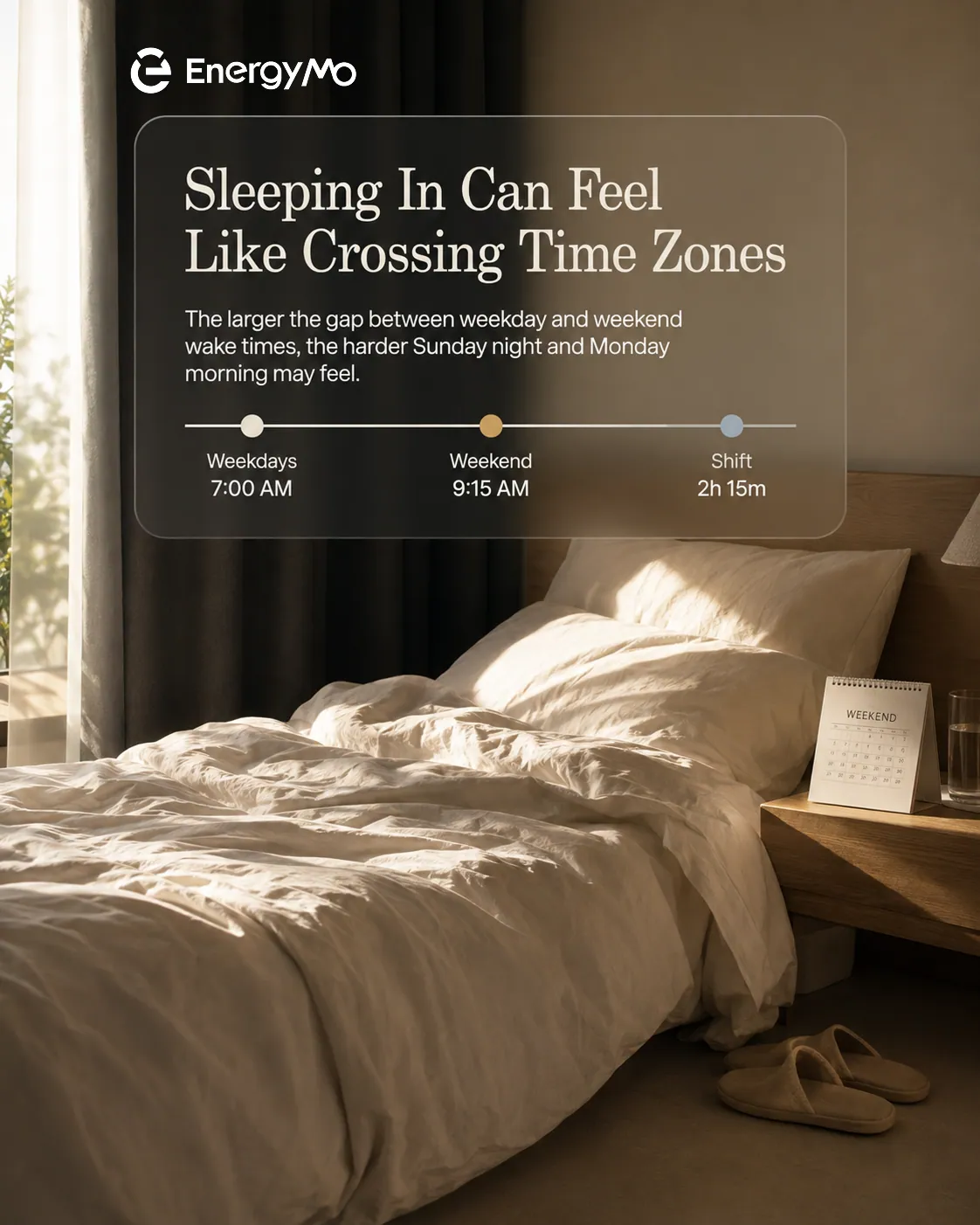
The large gap between weekday and weekend wake times is often what disrupts things.
If you wake at 7:00 a.m. on weekdays but sleep in until 9:00 a.m. or later on weekends, the shift can feel a little like crossing time zones. Sunday night may be harder to fall asleep; Monday morning may be harder to start.
Three simple habits
You can start here:
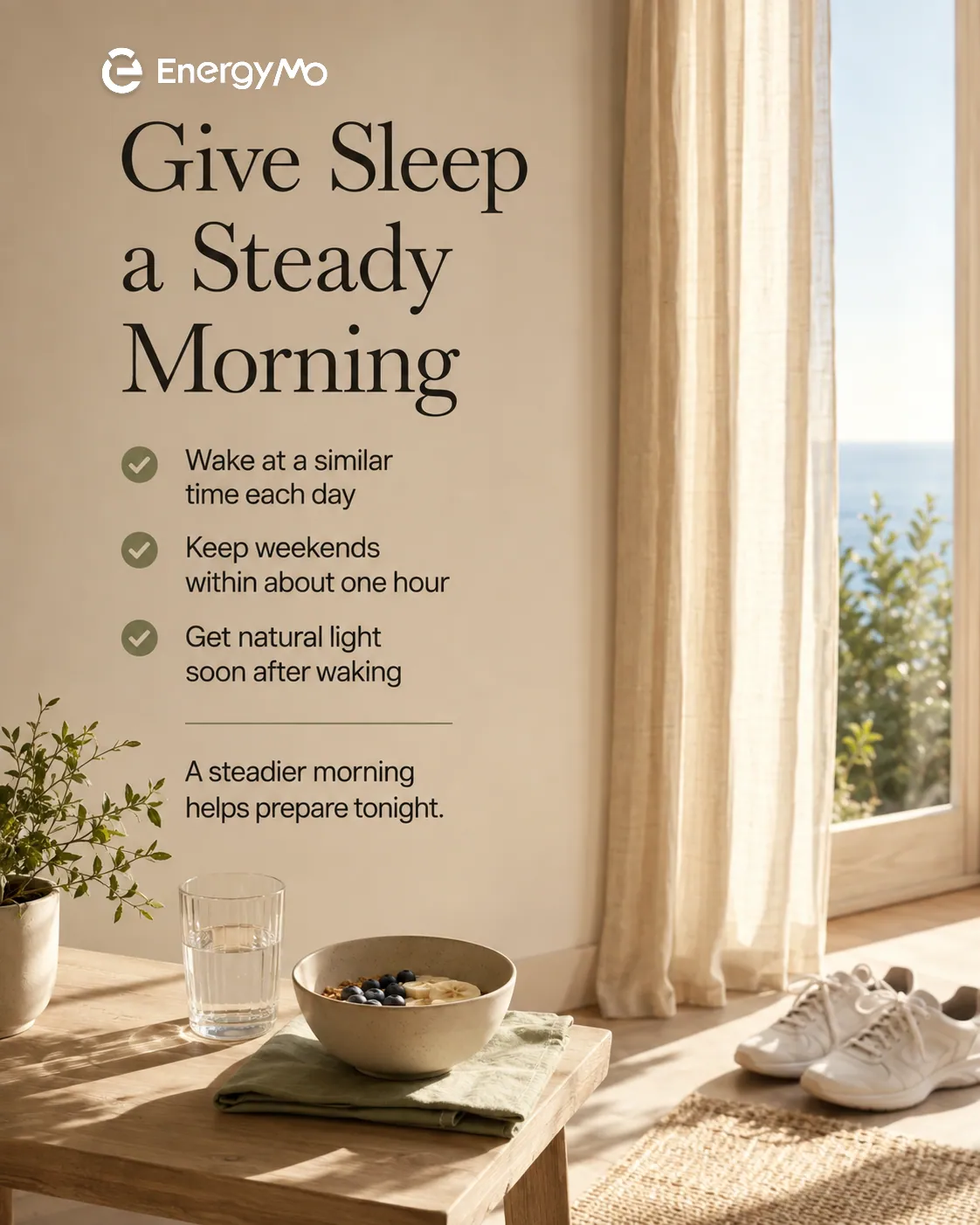
- Wake up around the same time every day
- Keep the difference between weekday and weekend wake-up times within about one hour
- Open the curtains or get outside for natural light as early as you can after waking
If you were short on sleep
If last night was clearly too short, rest and recovery still come first. Do not give up sleep duration in the long run just to “wake up on time.”
Stabilizing your mornings is also setting yourself up for tonight.
How much later do you typically wake up on weekends compared to weekdays?
This article is general wellness information, not medical advice.
Continue with the complete guide
How to interpret this pattern
Start with timing and context before looking at a score. Compare several nights recorded with the same device, on the same finger, and under broadly similar conditions. Bedtime, wake time, total sleep, interruptions, alcohol, late meals, exercise, travel, illness, room temperature, and stress can all change the pattern. One unusual night is an observation; a repeated change is a trend worth investigating.
A smart ring estimates sleep from indirect signals such as movement, pulse patterns, HRV, and temperature change. It does not measure brain activity and cannot reproduce a clinical sleep study. Stage labels are therefore best used to compare broad patterns within one device, not as exact minute-by-minute measurements or a diagnosis.
A useful seven-day review
Keep the ring comfortably fitted and note the few events that could explain a change. At the end of the week, ask three questions: Did the pattern repeat? Did it coincide with how you felt during the day? Did a change in routine precede it? This approach turns the data into context without making a medical conclusion from a dashboard.
Persistent insomnia, severe daytime sleepiness, loud snoring, witnessed breathing pauses, or other concerning symptoms deserve professional assessment even when a wearable score appears normal.
Frequently Asked Questions
Should I worry about one poor sleep score?
Usually, one result is not enough to establish a pattern. Check fit and missing data, then compare several similar nights and your daytime experience.
Are smart-ring sleep stages exact?
No. They are algorithmic estimates based on indirect body signals. They can support trend review but do not replace polysomnography.
Can a smart ring diagnose a sleep disorder?
A consumer smart ring cannot diagnose or rule out a sleep disorder. Discuss persistent symptoms with a qualified clinician.
Sources and Further Reading
Continue Exploring
This article provides general wellness education. EnergyMo products are consumer wellness devices and are not intended to diagnose, treat, cure, or prevent disease.
منتجات EnergyMo أجهزة عافية للمستهلك وليست أجهزة طبية. لا تُستخدم لتشخيص أو علاج أو شفاء أو منع أي مرض. المعلومات المقدمة ليست نصيحة طبية.
تتبع ما يخبرك به جسمك
يجمع خاتم EnergyMo النوم والتعافي والحركة اليومية في جهاز أنيق واحد.