
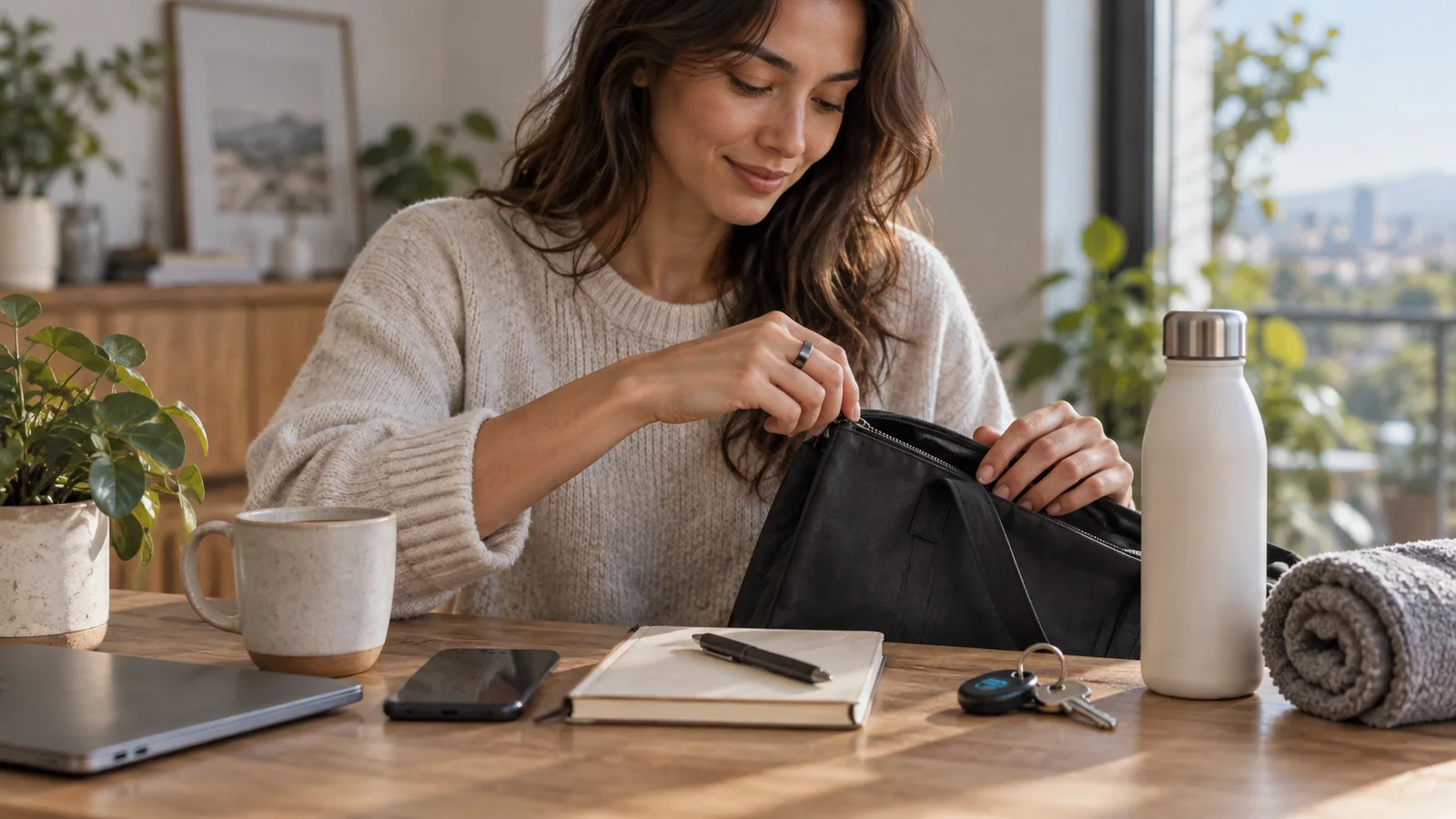
Your first seven days are less about proving performance and more about building consistent context.
Days 1–2: Build consistency first
Keep the same wearing finger when possible
Aim for a snug, comfortable fit—not restrictive pressure
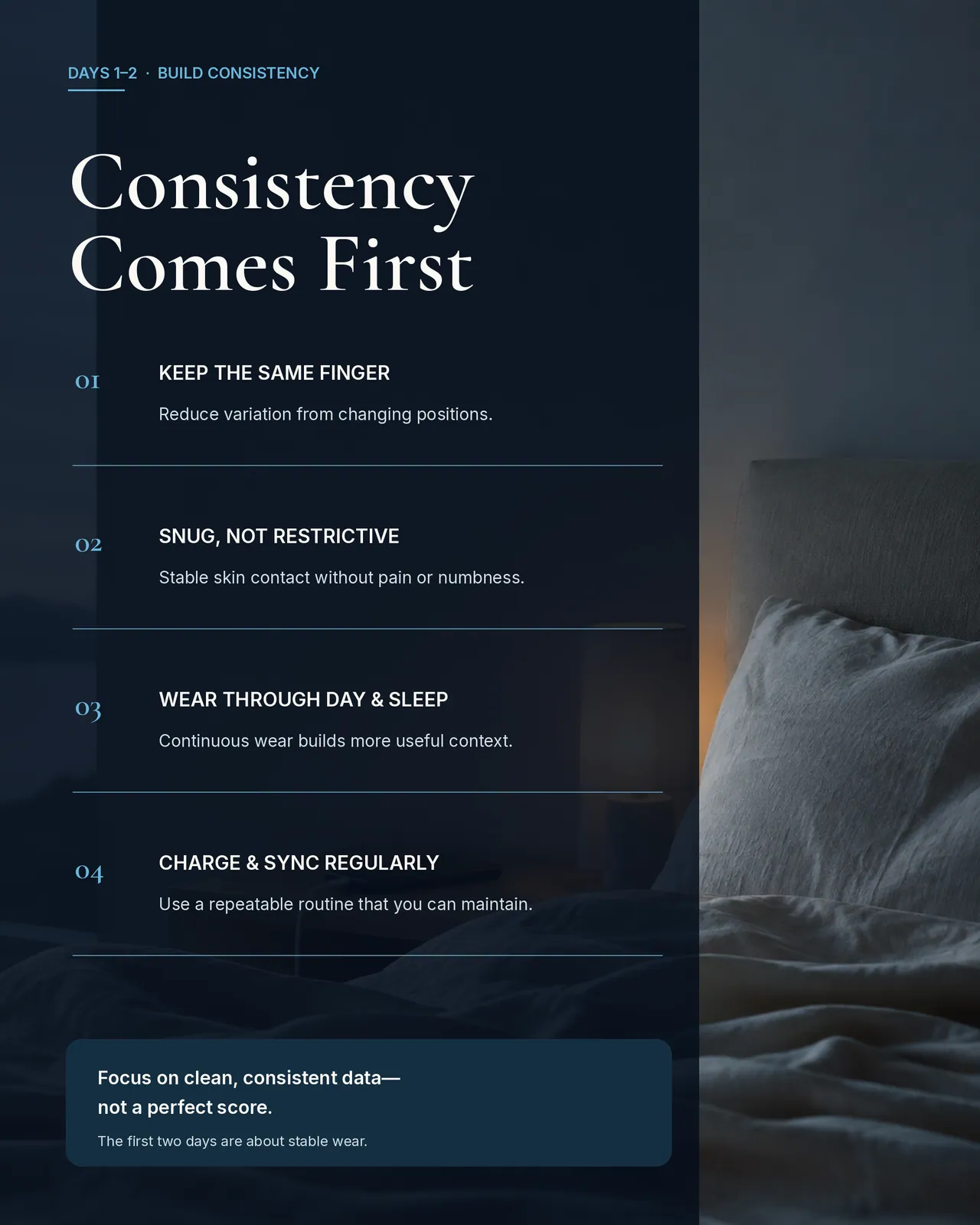
Wear through both daytime and sleep
Create a repeatable charging and syncing routine
Days 3–5: Learn your normal
- Sleep: timing, duration, and consistency
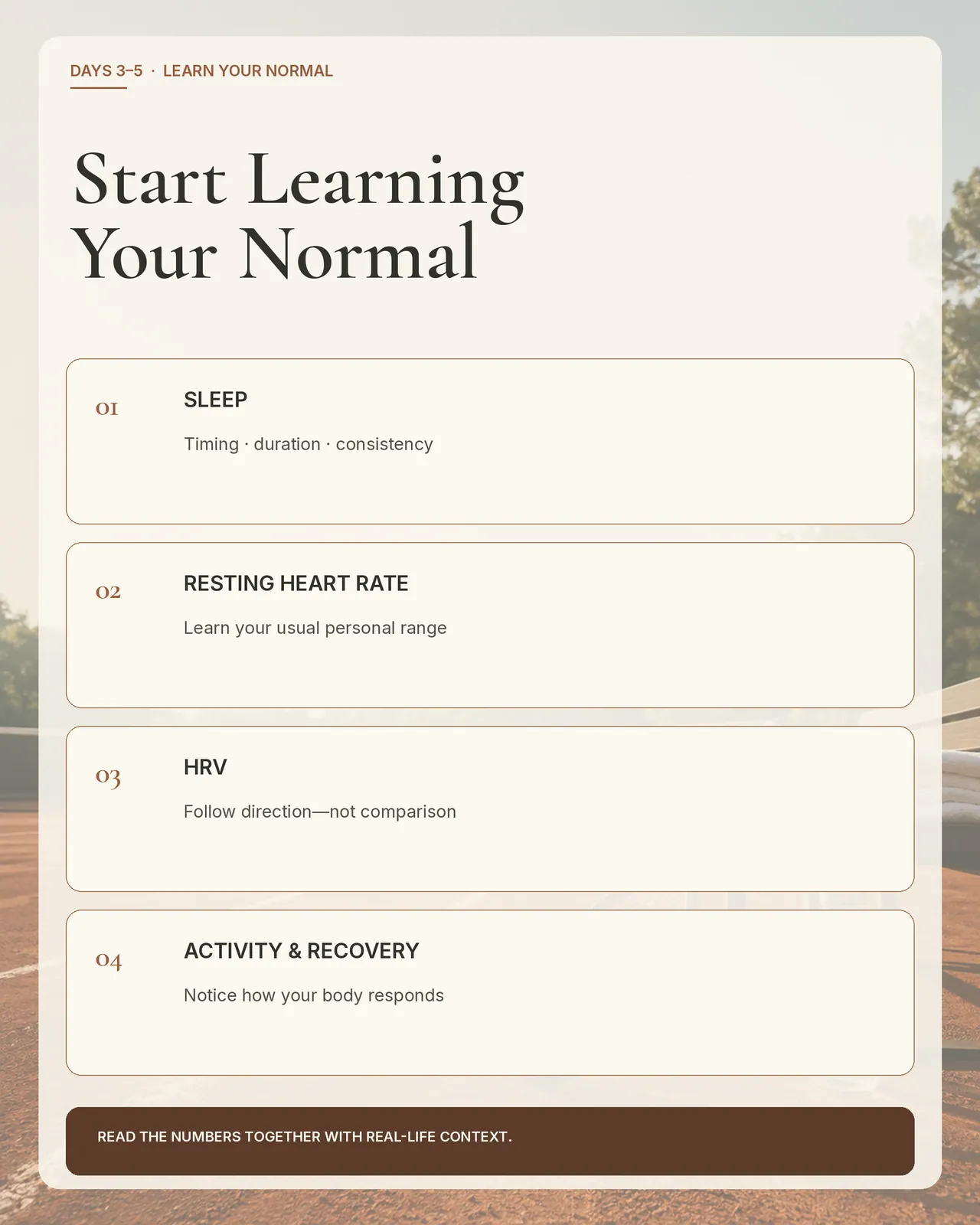
Resting heart rate: your usual personal range
HRV: follow direction instead of comparing with others
Activity and recovery: notice how your body responds after exercise
Days 6–7: Start a body journal
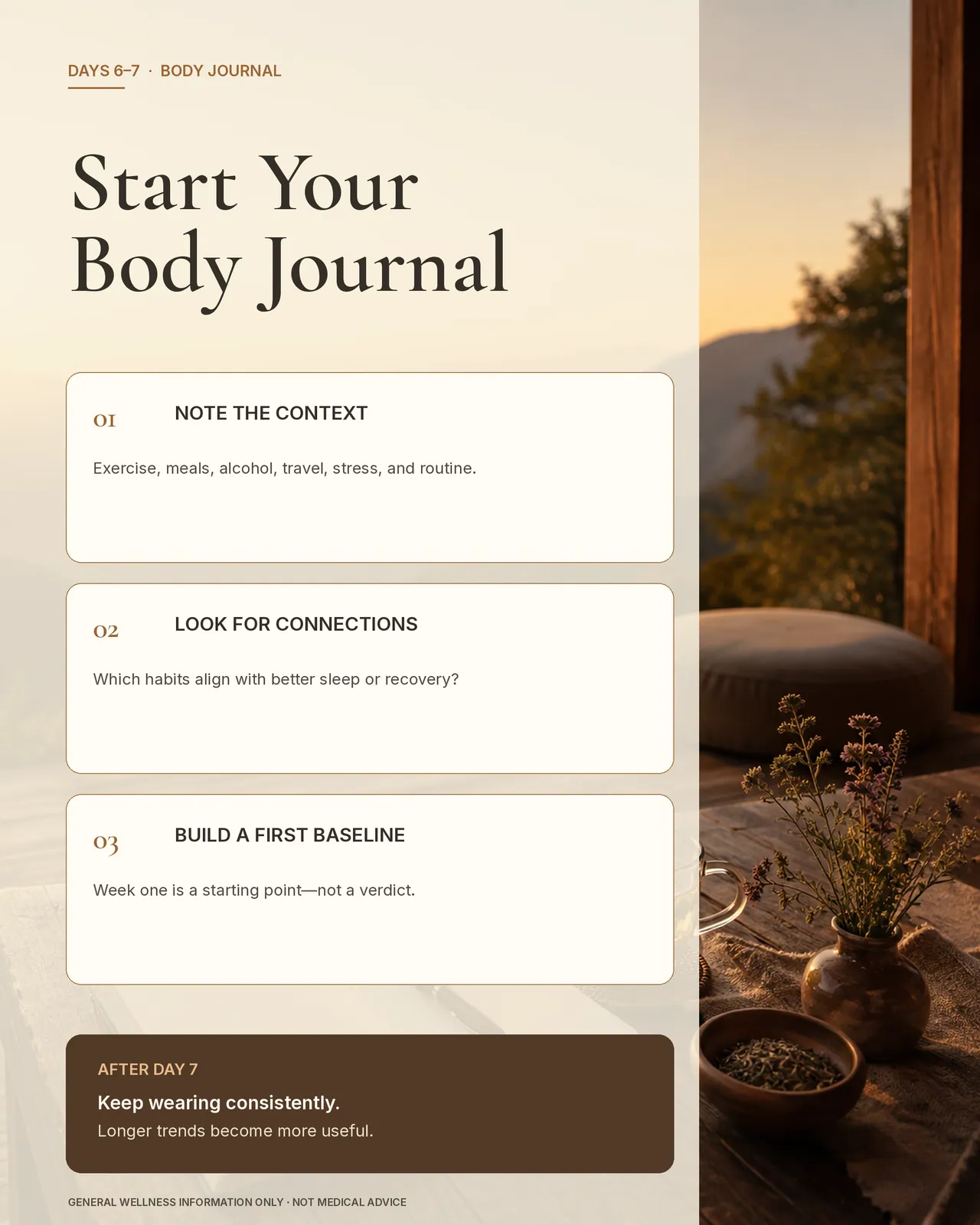
Note exercise, late meals, alcohol, travel, stress, and routine changes. Then look for habits that appear alongside better sleep or recovery trends.
Day 7 is only a starting point. A useful personal baseline generally takes longer to develop through consistent wear.
Keep observing for several weeks and read each number inside the context of real life.
For general wellness-trend reference only. Not intended for medical diagnosis or treatment.
Continue with the complete guide
Fit is part of measurement quality
Optical sensing depends on repeatable skin contact. The ring should stay oriented during ordinary movement without spinning freely, yet it should not cause pain, numbness, tingling, unusual color, or a persistent deep mark. A tighter fit is not automatically a more accurate fit. Excess pressure can be uncomfortable, while a loose ring can move the sensors away from their intended position.
Finger circumference changes during the day. Heat, exercise, hydration, sleep, travel, and temporary swelling can all alter how the same ring feels. Test the intended size through normal work, hand washing, walking, and sleep instead of judging it from a single daytime fitting. Brand sizing systems can differ, so use the current product's sizing method whenever possible.
Check the signal before blaming the sensor
When data is missing, review battery level, sync history, sensor cleanliness, hand temperature, movement, fit, and whether the ring was removed. Change one variable at a time and compare the next few nights. This gives support teams useful evidence and avoids turning one gap into a broad accuracy claim.
Remove the ring if you experience pain, numbness, tingling, unusual color, coldness, or worsening swelling. Seek appropriate medical help if symptoms persist or the ring cannot be removed safely.
Frequently Asked Questions
Should a smart ring leave a mark?
A light temporary impression can occur, but pain, numbness, persistent deep marks, or skin-color changes are reasons to remove it and reassess the size.
Can I use my jewelry size?
It can be a starting point, but smart-ring geometry and brand sizing can differ. A product-specific sizing kit or method is more reliable.
Which finger gives the best data?
Follow the manufacturer's placement guidance and choose a finger that keeps stable, comfortable contact across the day and night.
Sources and Further Reading
Continue Exploring
This article provides general wellness education and does not replace professional medical advice.
Los productos EnergyMo son dispositivos de bienestar para el consumidor, no dispositivos médicos. No están destinados a diagnosticar, tratar, curar ni prevenir ninguna enfermedad. La información proporcionada no constituye consejo médico.
Registra lo que tu cuerpo te dice
EnergyMo Ring reúne sueño, recuperación y movimiento diario en un wearable discreto.