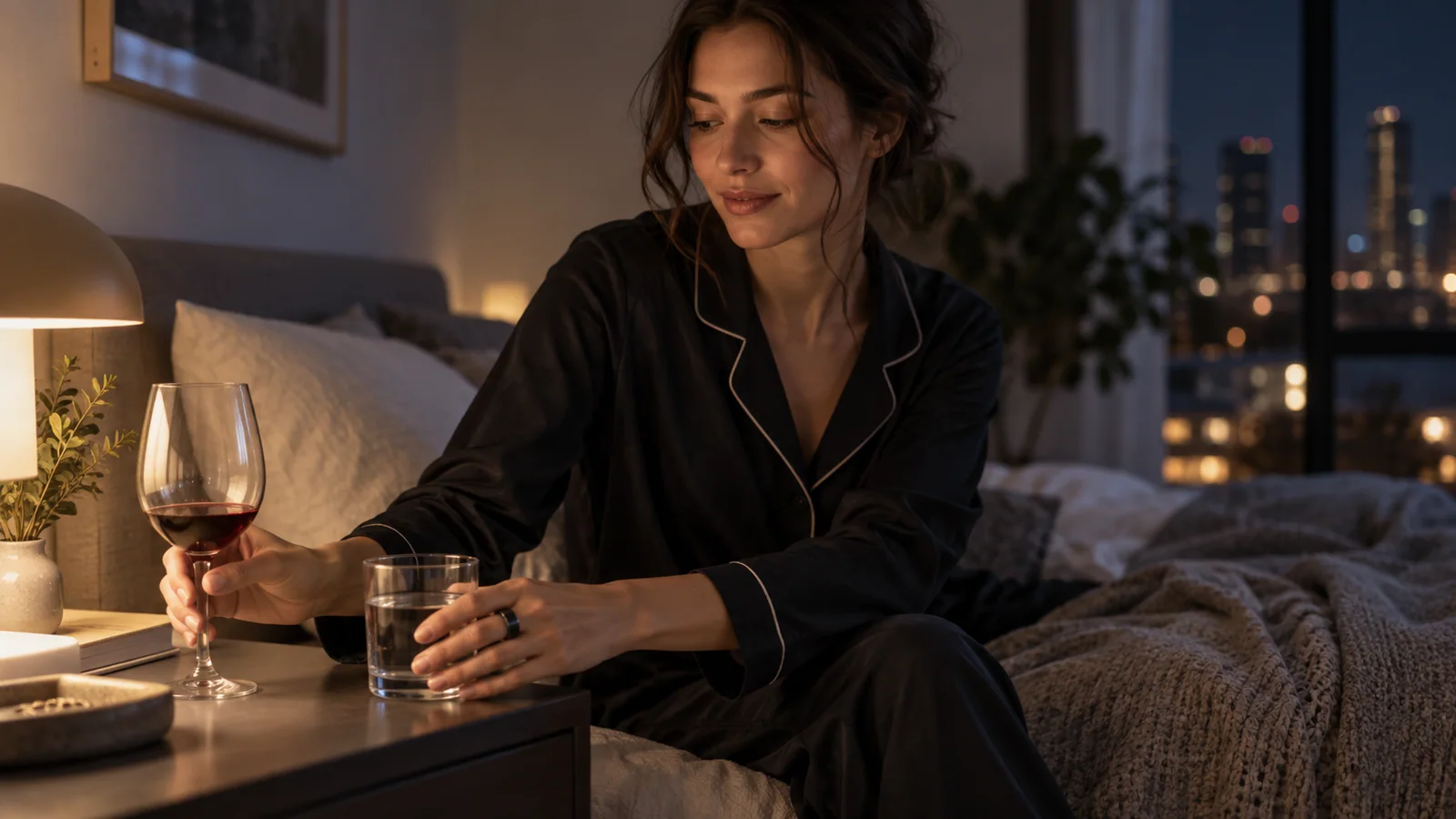
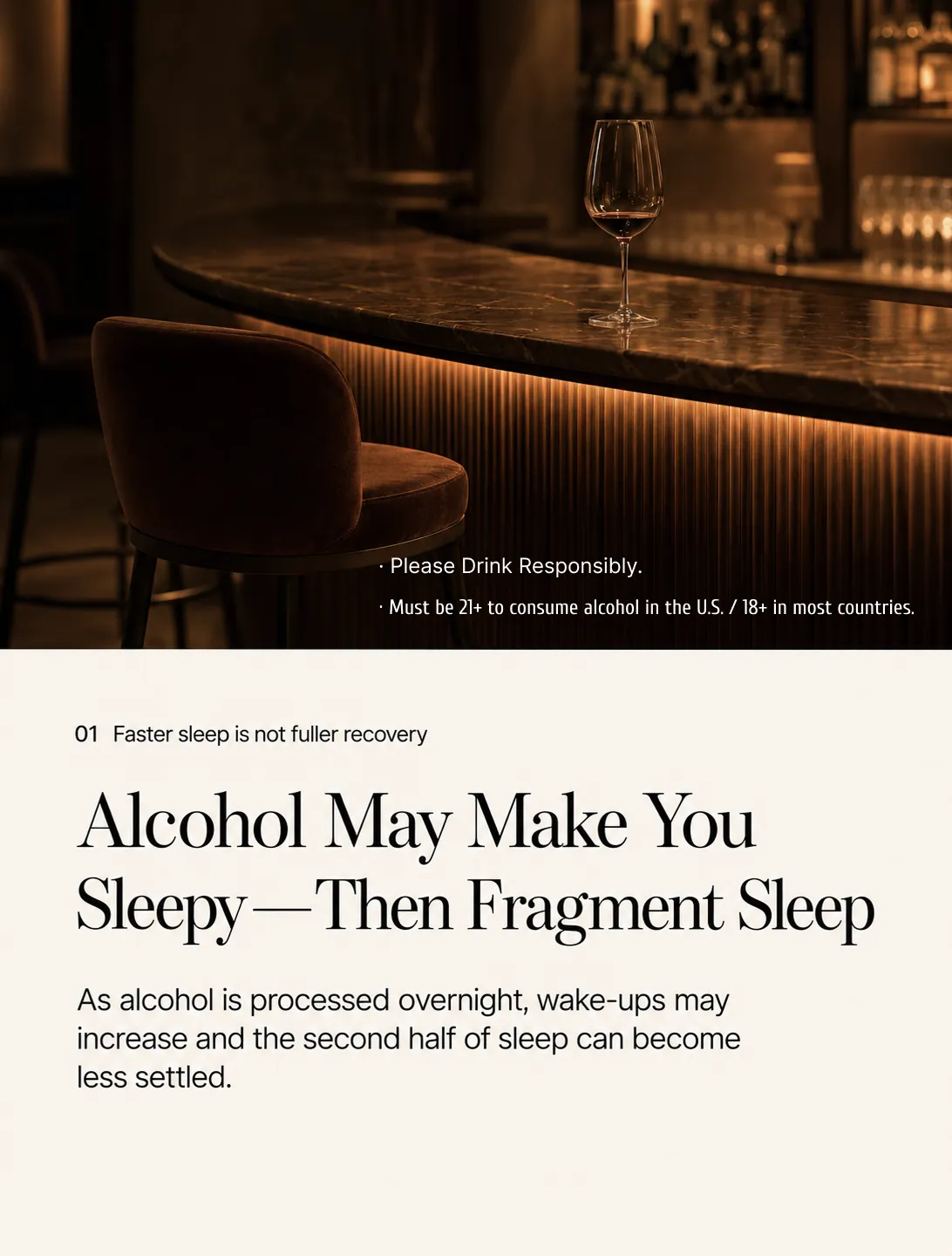
Alcohol can make you feel sleepy, but faster sleep onset does not always mean better recovery.
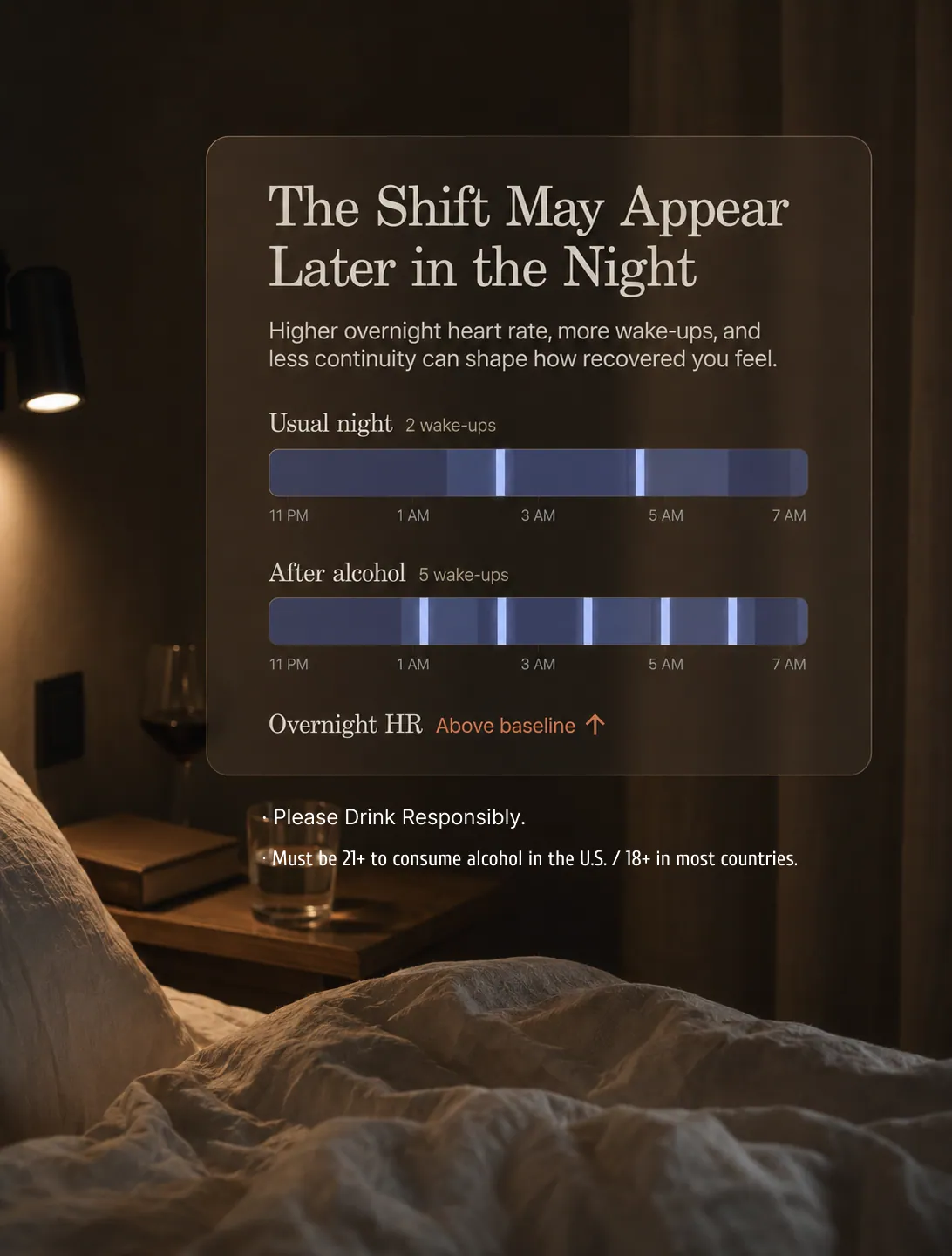
As alcohol is processed overnight, sleep may become more fragmented. More wake-ups, a higher overnight heart rate, and reduced sleep continuity can all shape how restored you feel the next morning.
If you use a sleep tracking smart ring, compare drinking and alcohol-free nights across:
Overnight wake-ups
Heart rate compared with your baseline
Deep and REM sleep trends
Overall sleep continuity
Next-day energy and recovery
A health tracking ring is most useful when it helps you notice patterns—not when one night’s score becomes a verdict. By following several nights, you can begin to understand how evening habits relate to your own sleep data.
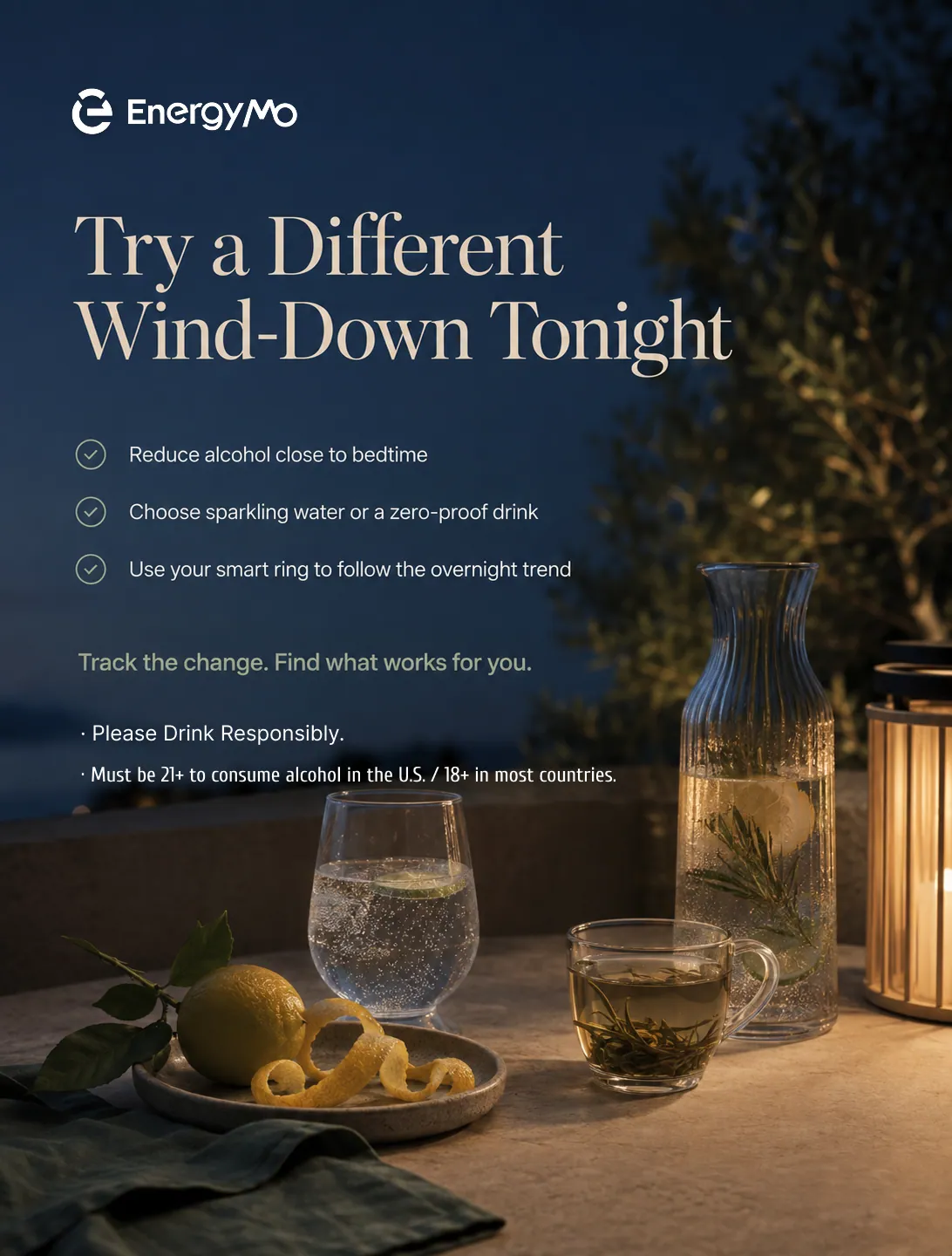
Try a different wind-down tonight
Reduce alcohol close to bedtime
Choose sparkling water, herbal tea, or a zero-proof drink
Compare how you feel with your smart ring sleep data
Falling asleep faster is not the same as sleeping better. Follow the whole night—not just the moment you drift off.
Have you compared your smart ring data after drinking and alcohol-free nights?
Continue with the complete guide
How to interpret this pattern
Start with timing and context before looking at a score. Compare several nights recorded with the same device, on the same finger, and under broadly similar conditions. Bedtime, wake time, total sleep, interruptions, alcohol, late meals, exercise, travel, illness, room temperature, and stress can all change the pattern. One unusual night is an observation; a repeated change is a trend worth investigating.
A smart ring estimates sleep from indirect signals such as movement, pulse patterns, HRV, and temperature change. It does not measure brain activity and cannot reproduce a clinical sleep study. Stage labels are therefore best used to compare broad patterns within one device, not as exact minute-by-minute measurements or a diagnosis.
A useful seven-day review
Keep the ring comfortably fitted and note the few events that could explain a change. At the end of the week, ask three questions: Did the pattern repeat? Did it coincide with how you felt during the day? Did a change in routine precede it? This approach turns the data into context without making a medical conclusion from a dashboard.
Persistent insomnia, severe daytime sleepiness, loud snoring, witnessed breathing pauses, or other concerning symptoms deserve professional assessment even when a wearable score appears normal.
Frequently Asked Questions
Should I worry about one poor sleep score?
Usually, one result is not enough to establish a pattern. Check fit and missing data, then compare several similar nights and your daytime experience.
Are smart-ring sleep stages exact?
No. They are algorithmic estimates based on indirect body signals. They can support trend review but do not replace polysomnography.
Can a smart ring diagnose a sleep disorder?
A consumer smart ring cannot diagnose or rule out a sleep disorder. Discuss persistent symptoms with a qualified clinician.
Sources and Further Reading
Continue Exploring
This article provides general wellness education. EnergyMo products are consumer wellness devices and are not intended to diagnose, treat, cure, or prevent disease.
EnergyMo products are consumer wellness devices, not medical devices. They are not intended to diagnose, treat, cure, or prevent any disease. Information provided is not medical advice.
Track what your body is telling you
EnergyMo Ring brings sleep, recovery, and daily movement into one discreet wearable.