

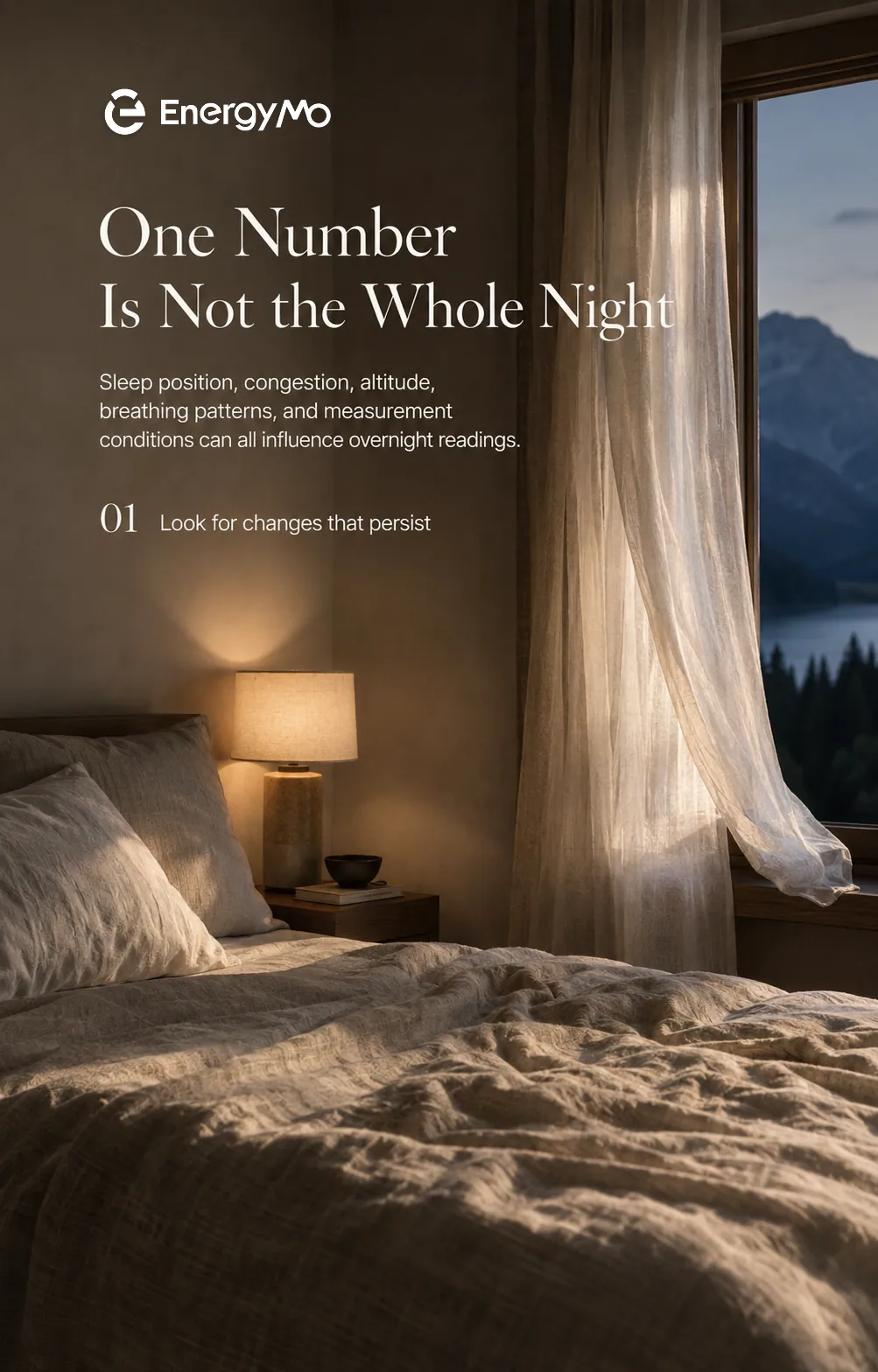
One isolated number rarely tells the story of an entire night.
Sleep position, congestion, breathing patterns, alcohol, altitude, measurement conditions, and Smart Ring fit can all influence overnight readings. An occasional change does not automatically indicate a health problem.
Look at the context
- Is the reading different from your personal baseline?
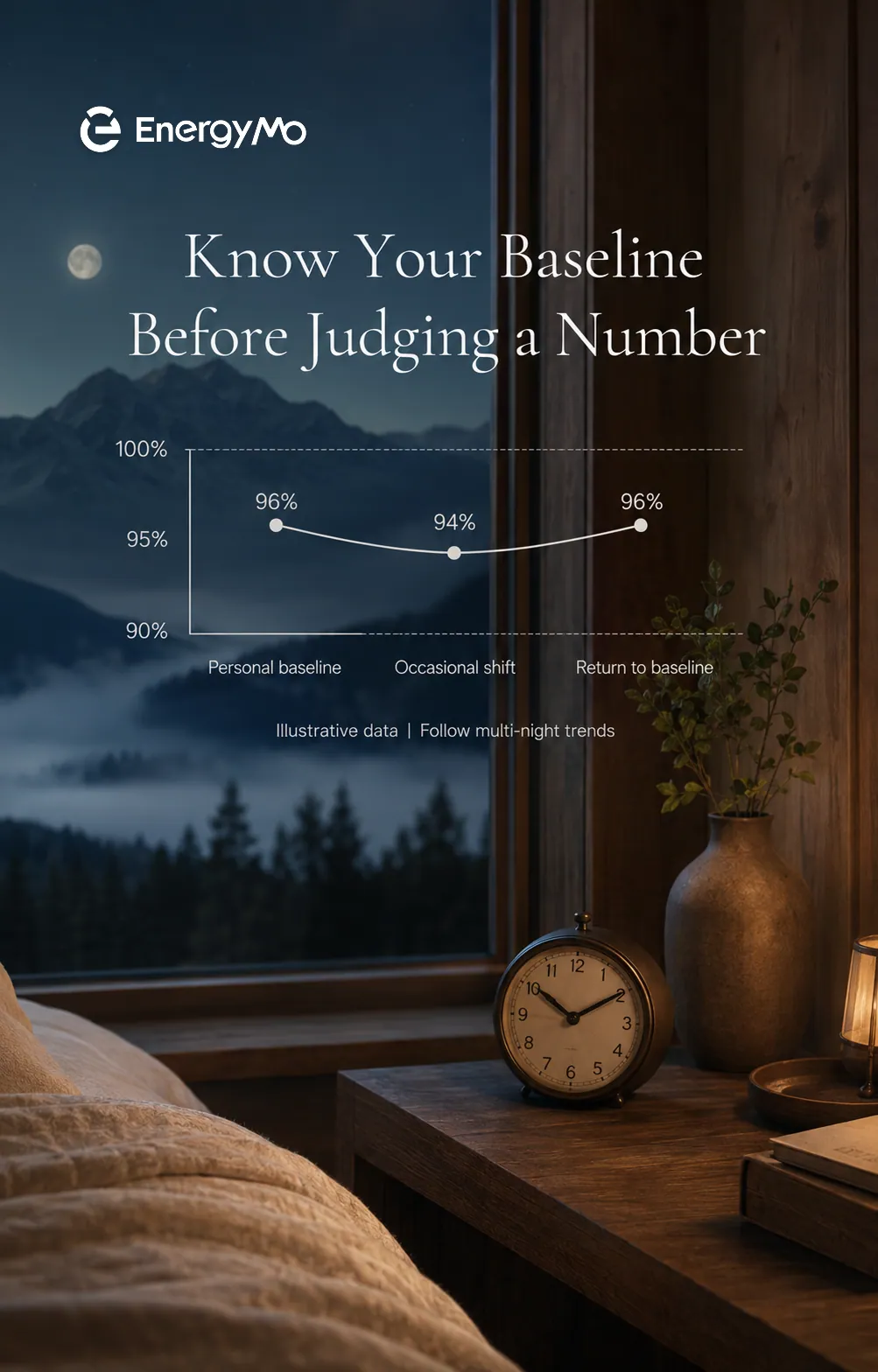
Does the change continue across several nights?
Were congestion, alcohol, altitude, or sleep position different?
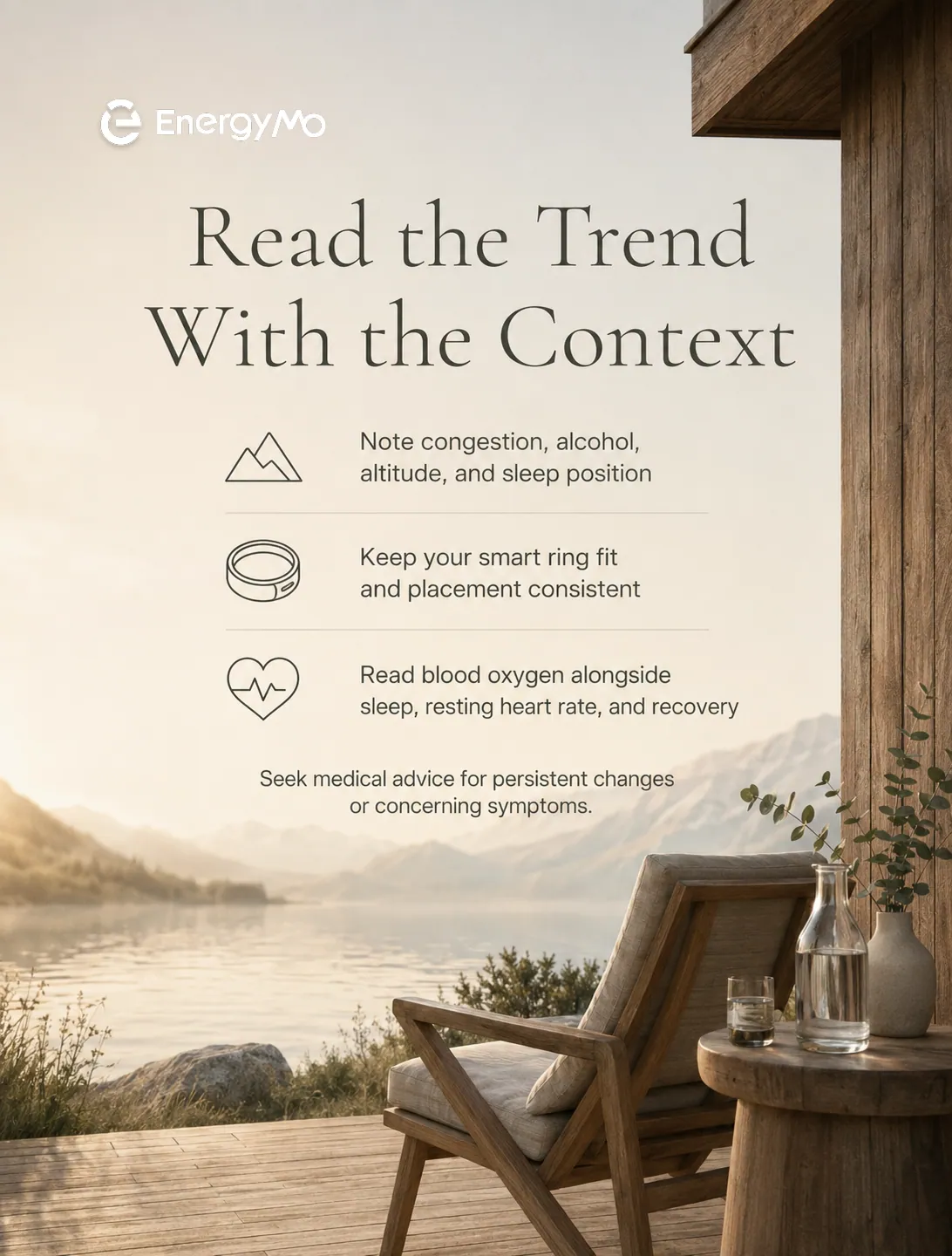
Did sleep, resting heart rate, or recovery trends change too?
Was your Smart Ring fit and placement consistent?
A blood oxygen tracking smart ring can help you connect overnight readings with sleep and longer-term wellness patterns. Its real value is not one percentage—it is the ability to follow changes over time.
Know your baseline before judging a number.
Seek professional medical advice if unusual changes persist or occur with concerning symptoms. Smart Ring insights are intended for general wellness and should not replace a medical device or professional diagnosis.
Continue with the complete guide
What the sensor is actually estimating
Wearable optical sensors send light into tissue and analyze changes in the reflected signal. Depending on the hardware and algorithm, the device may estimate pulse patterns or overnight oxygen-related trends. A temperature sensor usually follows change at the skin relative to a personal baseline; it is not the same as a clinical core-temperature measurement.
Signal quality changes with movement, fit, cold hands, circulation, sensor placement, skin contact, ambient conditions, and missing data. That is why a repeated overnight pattern is more informative than an isolated number. Compare like with like, keep the sensor area clean, and check whether the chart contains gaps before interpreting a change.
Confirm unexpected results responsibly
Repeat an unexpected observation under stable conditions and follow the device instructions. Do not combine absolute values from different consumer devices as if their sensors and algorithms were interchangeable. When a clinician recommends confirmation, use an appropriate validated medical device or clinical test.
A consumer ring cannot diagnose sleep apnea, infection, heart disease, or another medical condition. Breathing difficulty, bluish lips, confusion, chest pain, fainting, or other severe symptoms require prompt medical care.
Frequently Asked Questions
Does one unusual reading prove something is wrong?
No. Check signal quality and context, then look for a repeated pattern. Symptoms and clinical assessment matter more than one consumer reading.
Can cold hands affect optical data?
Yes. Peripheral circulation and skin temperature can affect the strength and stability of an optical signal.
Is skin-temperature trend the same as fever measurement?
No. A wearable skin-temperature deviation and a clinical body-temperature measurement are different measurements.
Sources and Further Reading
Continue Exploring
This article provides general wellness education and does not replace validated medical measurement or professional care.
EnergyMo products are consumer wellness devices, not medical devices. They are not intended to diagnose, treat, cure, or prevent any disease. Information provided is not medical advice.
Track what your body is telling you
EnergyMo Ring brings sleep, recovery, and daily movement into one discreet wearable.