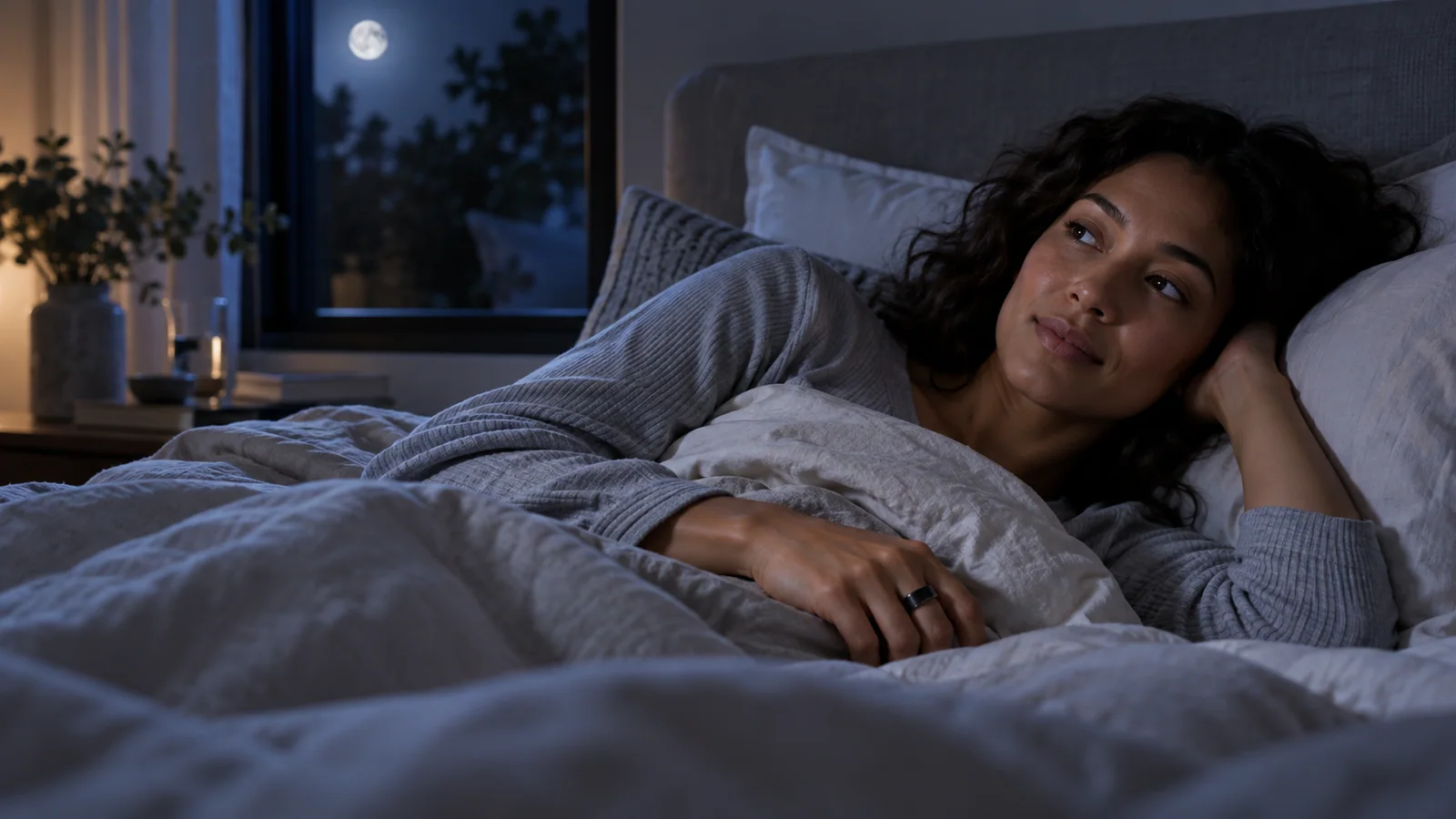
When reviewing sleep data, it is easy to focus on the number of times you woke during the night.
Two or three awakenings may look concerning—but sleep is not always one unbroken line from bedtime to morning.
A typical night includes several sleep cycles. Brief awakenings can occur as the body moves between sleep stages, and some may be too short to remember the next morning.
Instead of looking only at frequency, consider
- 1.How long were you awake?
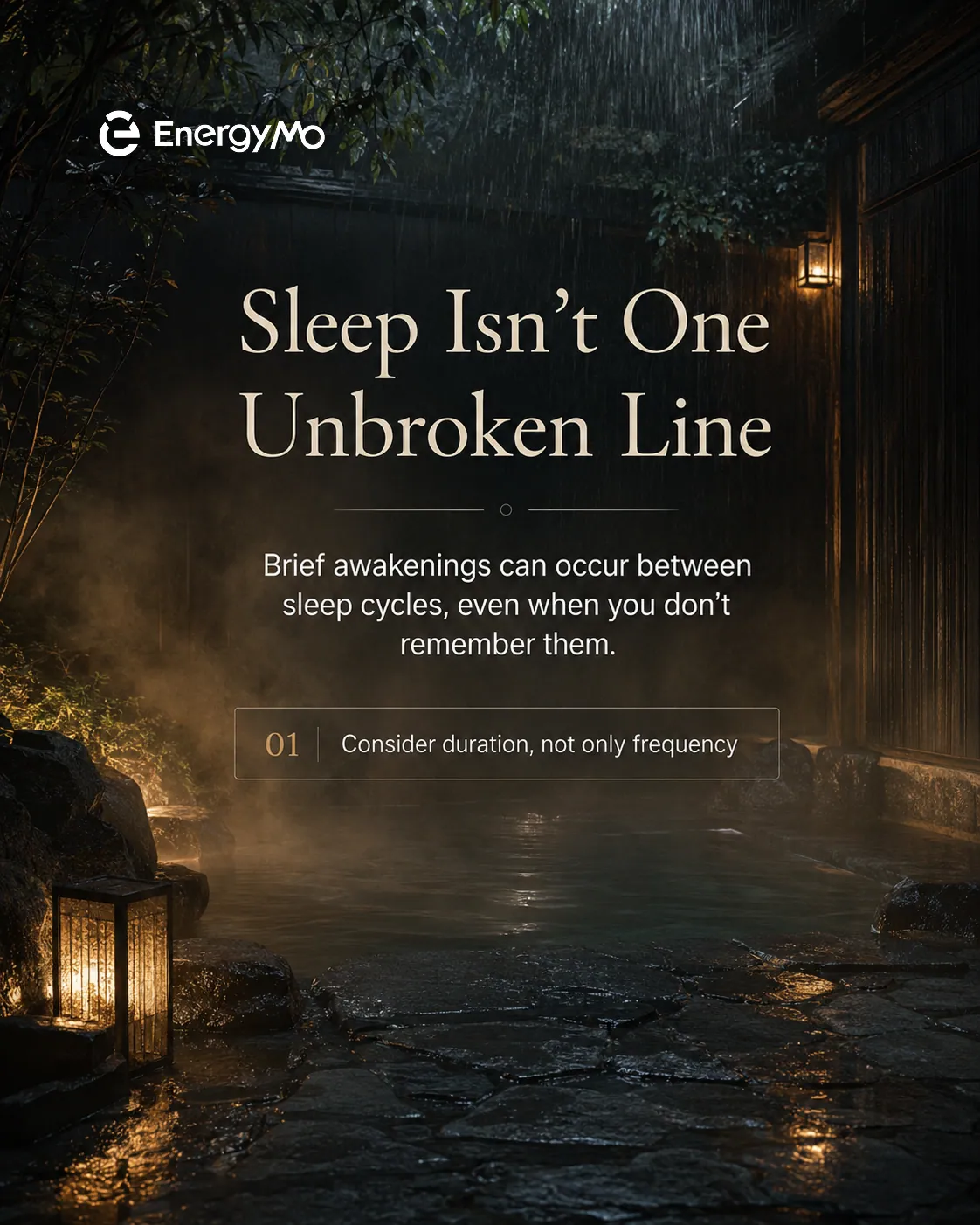
A brief awakening and a long period of wakefulness may affect sleep continuity differently.
- 2.How quickly did you fall asleep again?
Returning to sleep easily provides different context from remaining awake for an extended period.
- 3.Did the sleep environment change?
Noise, light, room temperature, mattress comfort, or movement nearby may influence nighttime sleep.
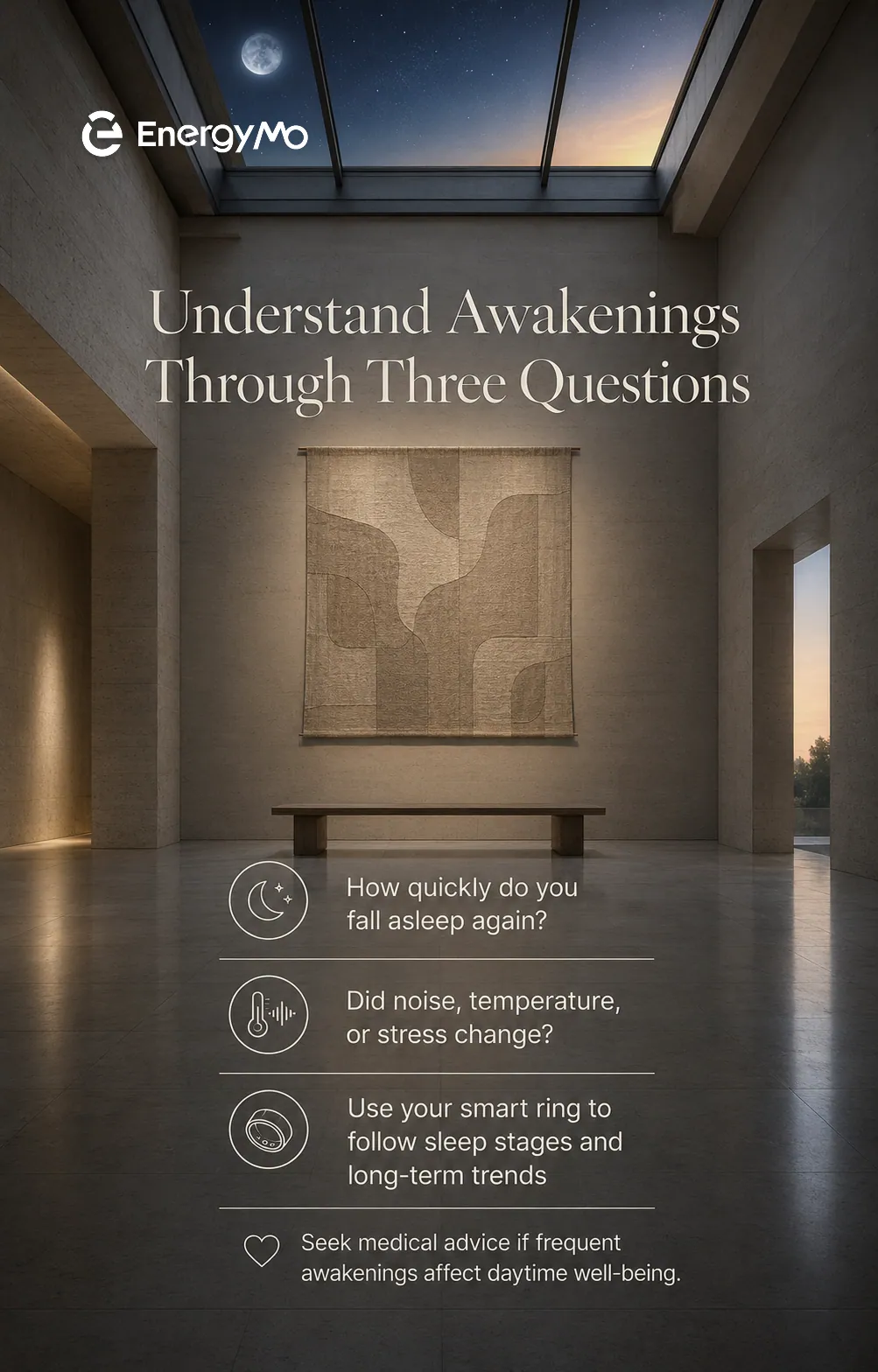
- 4.Were stress or daily habits involved?
Mental stress, alcohol, late meals, caffeine, travel, and schedule changes may all affect nighttime patterns.
- 5.How did you feel the next day?
If you wake feeling refreshed and remain alert during the day, a few brief awakenings do not necessarily mean the entire night was poor.
A sleep tracking Smart Ring can help you follow nighttime awakenings, sleep stages, sleep duration, nighttime heart rate, and HRV trends.
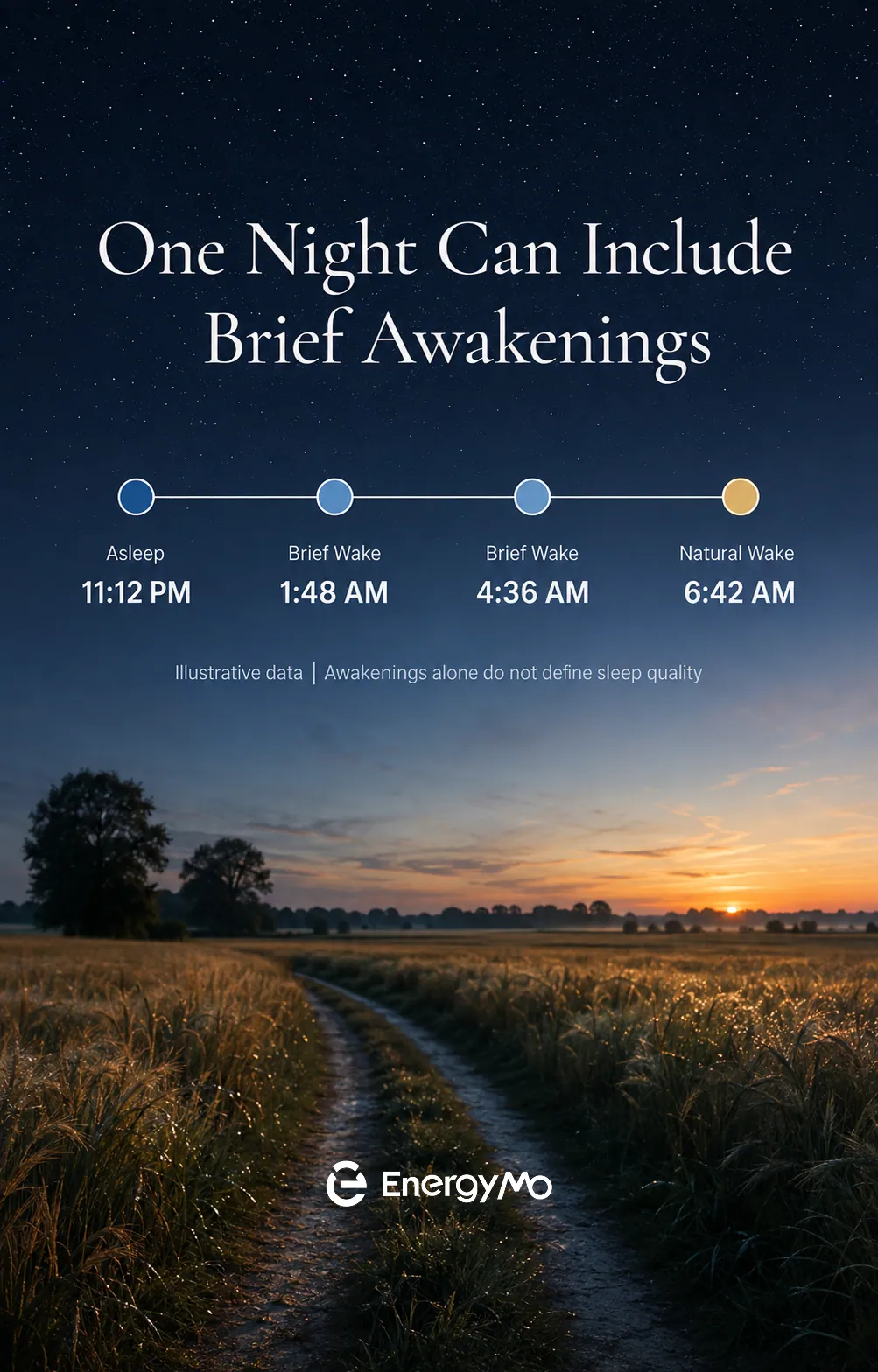
One awakening does not define the whole night.
Combine your sleep data with long-term patterns, recovery, and daytime well-being for a more complete view.
Smart Ring insights are intended for personal wellness tracking and are not a substitute for medical diagnosis. Seek professional medical advice if frequent awakenings, difficulty returning to sleep, or daytime fatigue persist.
#SmartRing #SleepTracking #SleepTrackingRing #NighttimeAwakenings #SleepQuality #SleepCycle #HRVTracking #NighttimeHeartRate #RecoveryTracking #HealthTrackingRing #WearableTechnology #EnergyMo
Continue with the complete guide
How to interpret this pattern
Start with timing and context before looking at a score. Compare several nights recorded with the same device, on the same finger, and under broadly similar conditions. Bedtime, wake time, total sleep, interruptions, alcohol, late meals, exercise, travel, illness, room temperature, and stress can all change the pattern. One unusual night is an observation; a repeated change is a trend worth investigating.
A smart ring estimates sleep from indirect signals such as movement, pulse patterns, HRV, and temperature change. It does not measure brain activity and cannot reproduce a clinical sleep study. Stage labels are therefore best used to compare broad patterns within one device, not as exact minute-by-minute measurements or a diagnosis.
A useful seven-day review
Keep the ring comfortably fitted and note the few events that could explain a change. At the end of the week, ask three questions: Did the pattern repeat? Did it coincide with how you felt during the day? Did a change in routine precede it? This approach turns the data into context without making a medical conclusion from a dashboard.
Persistent insomnia, severe daytime sleepiness, loud snoring, witnessed breathing pauses, or other concerning symptoms deserve professional assessment even when a wearable score appears normal.
Frequently Asked Questions
Should I worry about one poor sleep score?
Usually, one result is not enough to establish a pattern. Check fit and missing data, then compare several similar nights and your daytime experience.
Are smart-ring sleep stages exact?
No. They are algorithmic estimates based on indirect body signals. They can support trend review but do not replace polysomnography.
Can a smart ring diagnose a sleep disorder?
A consumer smart ring cannot diagnose or rule out a sleep disorder. Discuss persistent symptoms with a qualified clinician.
Sources and Further Reading
Continue Exploring
This article provides general wellness education. EnergyMo products are consumer wellness devices and are not intended to diagnose, treat, cure, or prevent disease.
EnergyMo products are consumer wellness devices, not medical devices. They are not intended to diagnose, treat, cure, or prevent any disease. Information provided is not medical advice.
Track what your body is telling you
EnergyMo Ring brings sleep, recovery, and daily movement into one discreet wearable.